
Bibcode
Villarroel, Beatriz; Marcy, Geoffrey W.; Geier, Stefan; Streblyanska, Alina; Solano, Enrique; Andruk, Vitaly N.; Shultz, Matthew E.; Gupta, Alok C.; Mattsson, Lars
Referencia bibliográfica
Scientific Reports
Fecha de publicación:
0
2021
Número de citas
25
Número de citas referidas
17
Descripción
Nine point sources appeared within half an hour on a region within ∼? 10 arcmin of a red-sensitive photographic plate taken in April 1950 as part of the historic Palomar Sky Survey. All nine sources are absent on both previous and later photographic images, and absent in modern surveys with CCD detectors which go several magnitudes deeper. We present deep CCD images with the 10.4-m Gran Telescopio Canarias, reaching brightness r ∼26 ? mag, that reveal possible optical counterparts, although these counterparts could equally well be just chance projections. The incidence of transients in the investigated photographic plate is far higher than expected from known detection rates of optical counterparts to e.g. flaring dwarf stars, Fast Radio Bursts, Gamma Ray Bursts or microlensing events. One possible explanation is that the plates have been subjected to an unknown type of contamination producing mainly point sources with of varying intensities along with some mechanism of concentration within a radius of ∼? 10 arcmin on the plate. If contamination as an explanation can be fully excluded, another possibility is fast (t <0.5 ? s) solar reflections from objects near geosynchronous orbits. An alternative route to confirm the latter scenario is by looking for images from the First Palomar Sky Survey where multiple transients follow a line.
Proyectos relacionados
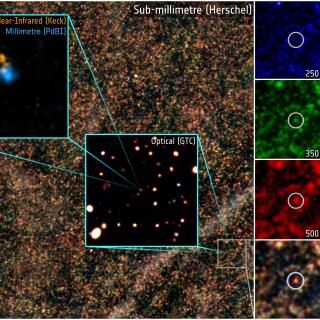
Formación y Evolución de Galaxias: Observaciones Infrarrojas y en otras Longitudes de Onda
Este grupo desarrolla varios proyectos extragalácticos en diferentes rangos del espectro electromagnético utilizando satélites y telescopios en tierra para estudiar la evolución cosmológica de las galaxias y el origen de la actividad nuclear en galaxias activas. En el aspecto instrumental, el grupo forma parte del consorcio internacional que ha
Ismael
Pérez Fournon
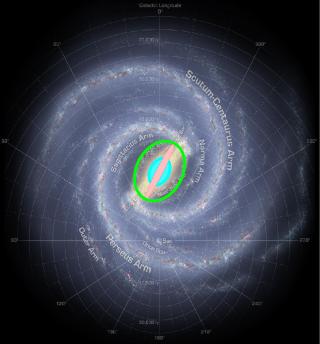
Vía Láctea y galaxias cercanas
El objetivo general del proyecto es el estudio de la morfología, poblaciones estelares, cinemática y dinámica (incluyendo formación y evolución) de la Vía Láctea y sus galaxias satélites u otras del Grupo Local. El proyecto puede dividirse en dos líneas principales: I. Estructura de la Vía Láctea y galaxias cercanas. El estudio detallado de la
Martín
López Corredoira