
Bibcode
Malavolta, L.; Granata, V.; Damasso, M.; Borsato, L.; Zurlo, A.; Rosenberg, A.; Milone, A. P.; Bedin, L. R.; Piotto, G.; Aparicio, A.; Sada, P. V.; Murabito, S.; Cunial, A.; Nascimbeni, V.
Referencia bibliográfica
Astronomy and Astrophysics, Volume 549, id.A30, 14 pp.
Fecha de publicación:
1
2013
Revista
Número de citas
40
Número de citas referidas
36
Descripción
The TASTE project is searching for low-mass planets with the transit
timing variation (TTV) technique by gathering high-precision,
short-cadence light curves for a selected sample of transiting
exoplanets. It has been claimed that the "hot Jupiter" WASP-3b could be
perturbed by a second planet. Presenting eleven new light curves
(secured at the IAC80 and UDEM telescopes) and re-analyzing thirty-eight
archival light curves in a homogeneous way, we show that new data do not
confirm the previously claimed TTV signal. However, we bring evidence
that measurements are not consistent with a constant orbital period,
though no significant periodicity can be detected. Additional dynamical
modeling and follow-up observations are planned to constrain the
properties of the perturber or to put upper limits to it. We provide a
refined ephemeris for WASP-3b and improved orbital/physical parameters.
A contact eclipsing binary, serendipitously discovered among field
stars, is reported here for the first time.
This article is based on observations made with the IAC80 telescope
operated on the island of Tenerife by the Instituto de
Astrofísica de Canarias (IAC) in the Spanish Observatorio del
Teide.Tables 1 and 3 and Appendix A are available in electronic form at
http://www.aanda.orgPhotometric data
are only available at the CDS via anonymous ftp to cdsarc.u-strasbg.fr
(130.79.128.5) or via http://cdsarc.u-strasbg.fr/viz-bin/qcat?J/A+A/549/A30
Proyectos relacionados
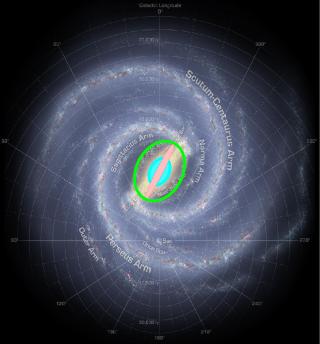
Vía Láctea y galaxias cercanas
El objetivo general del proyecto es el estudio de la morfología, poblaciones estelares, cinemática y dinámica (incluyendo formación y evolución) de la Vía Láctea y sus galaxias satélites u otras del Grupo Local. El proyecto puede dividirse en dos líneas principales: I. Estructura de la Vía Láctea y galaxias cercanas. El estudio detallado de la
Martín
López Corredoira