
Bibcode
Monelli, M.; Cassisi, S.; Mapelli, M.; Bernard, E. J.; Aparicio, A.; Skillman, E. D.; Stetson, P. B.; Gallart, C.; Hidalgo, S. L.; Mayer, L.; Tolstoy, E.
Referencia bibliográfica
The Astrophysical Journal, Volume 744, Issue 2, article id. 157 (2012).
Fecha de publicación:
1
2012
Revista
Número de citas
39
Número de citas referidas
32
Descripción
We present the first investigation of the Blue Straggler star (BSS)
population in two isolated dwarf spheroidal galaxies of the Local Group,
Cetus and Tucana. Deep Hubble Space Telescope/Advanced Camera for
Surveys photometry allowed us to identify samples of 940 and 1214
candidates, respectively. The analysis of the star formation histories
of the two galaxies suggests that both host a population of BSSs.
Specifically, if the BSS candidates are interpreted as young main
sequence stars, they do not conform to their galaxy's age-metallicity
relationship. The analysis of the luminosity function and the radial
distributions supports this conclusion, and suggests a non-collisional
mechanism for the BSS formation, from the evolution of primordial
binaries. This scenario is also supported by the results of new
dynamical simulations presented here. Both galaxies coincide with the
relationship between the BSS frequency and the absolute visual magnitude
MV found by Momany et al. If this relationship is confirmed
by larger sample, then it could be a valuable tool to discriminate
between the presence of BSSs and galaxies hosting truly young
populations.
Based on observations made with the NASA/ESA Hubble Space Telescope,
obtained at the Space Telescope Science Institute, which is operated by
the Association of Universities for Research in Astronomy, Inc., under
NASA contract NAS5-26555. These observations are associated with program
10505.
Proyectos relacionados
Vía Láctea y galaxias cercanas
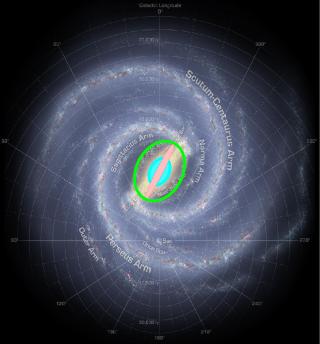
El objetivo general del proyecto es el estudio de la morfología, poblaciones estelares, cinemática y dinámica (incluyendo formación y evolución) de la Vía Láctea y sus galaxias satélites u otras del Grupo Local. El proyecto puede dividirse en dos líneas principales: I. Estructura de la Vía Láctea y galaxias cercanas. El estudio detallado de la
Martín
López Corredoira
Evolución Galáctica en el Grupo Local
La formación y evolución de galaxias es un problema fundamental en Astrofísica. Su estudio requiere “viajar atrás en el tiempo”, para lo cual hay dos enfoques complementarios. El mas extendido consiste en analizar las propiedades de las galaxias a diferentes distancias cosmológicas. Nuestro equipo se concentra en el otro enfoque, denominado
Emma
Fernández Alvar