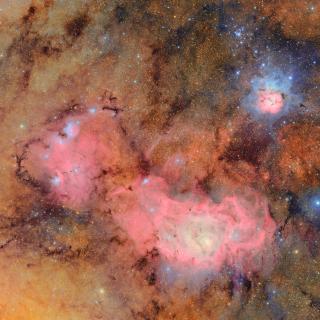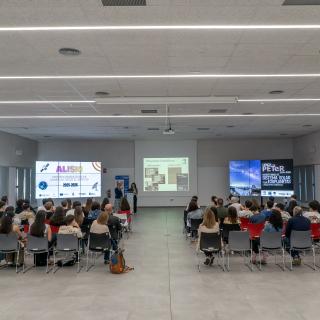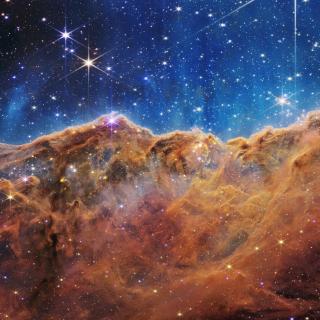

The Vera C. Rubin Observatory launches an ambitious ten-year study set to transform astronomical research
The Vera C. Rubin Observatory, based in Chile, has officially launched the Legacy Survey of Space and Time (LSST), a ten-year observational programme that will produce the most comprehensive and detailed survey of the southern sky to date. Jointly funded by the US National Science Foundation (NSF) and the US Department of Energy (DOE), the Canary Islands Institute of Astrophysics (IAC) is participating in this international initiative through the Spanish consortium, which will contribute to the scientific analysis of the data and the observational monitoring of numerous astronomical phenomena.
The observatory, named in honour of the astronomer Vera Rubin – a pioneer whose work provided the first solid evidence of the existence of dark matter – will observe the entire southern sky every few nights over a ten-year period, creating an unprecedented time series of the evolution of the Universe. Thanks to its 3,200-megapixel camera – the largest digital camera ever built for astronomy – the project will enable researchers to study everything from objects in the Solar System to some of the fundamental questions of modern cosmology, such as the nature of dark matter and dark energy.
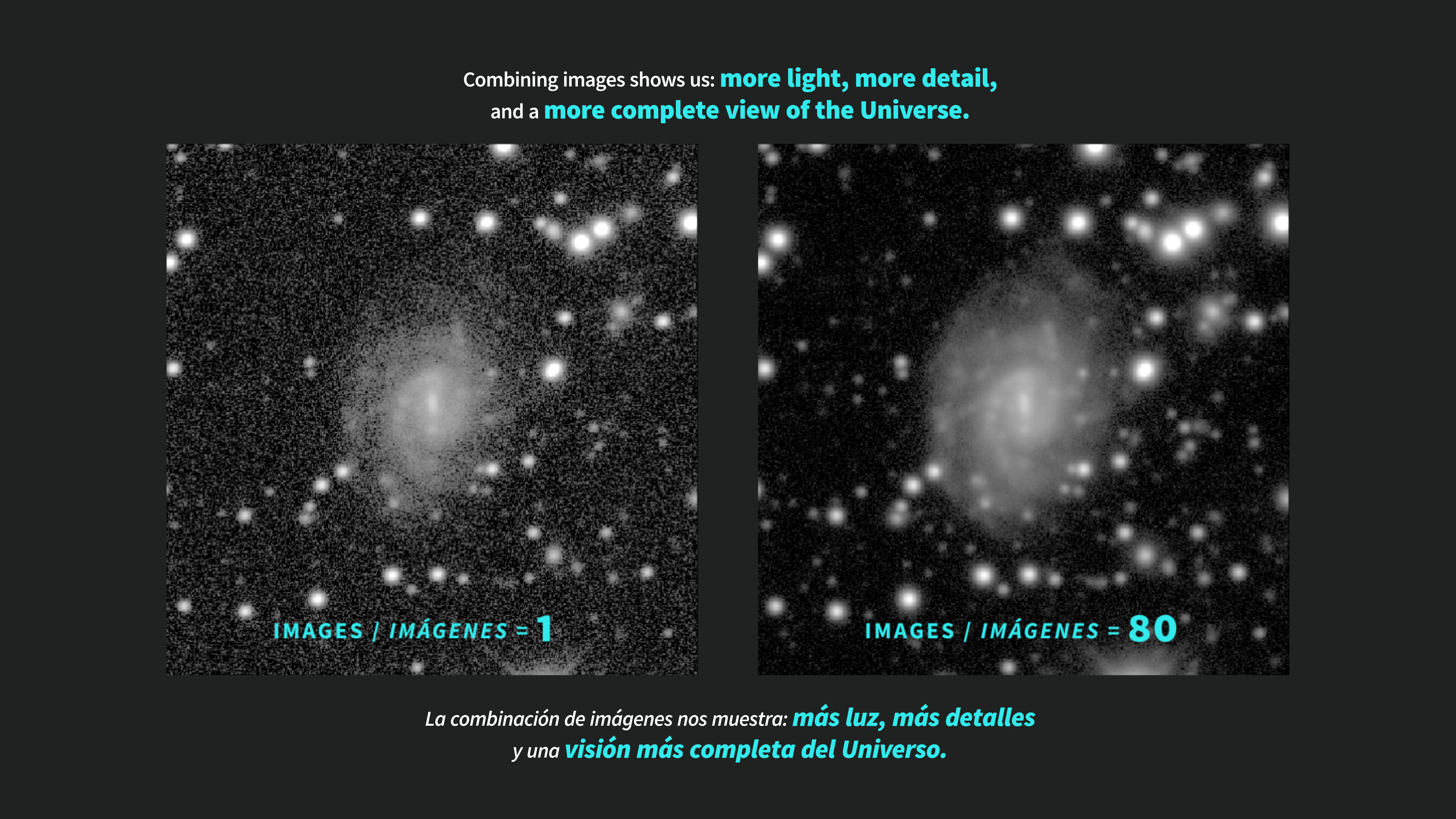
The LSST is designed to detect variable and transient phenomena, such as supernova explosions, collisions between compact objects and black hole activity, as well as to compile an unprecedented catalogue of asteroids and comets. During the initial observation phase alone, more than 11,000 previously unknown asteroids have already been identified.
As Darío Gil, chief scientist at the US Department of Energy, pointed out, “the launch of the LSST marks a new era for astronomy and will enable us to tackle some of the most important questions about the structure and evolution of the Universe”.
IAC’s involvement
Thousands of researchers and engineers from more than thirty countries have contributed to the development of the observatory. Spain is participating through a consortium comprising the Institute of Space Sciences (ICE-CSIC), the Institut d’Estudis Espacials de Catalunya (IEEC), the Institute of High Energy Physics (IFAE), the Port d’Informació Científica (PIC), the Institute of Theoretical Physics (IFT-UAM/CSIC), CIEMAT and the Instituto de Astrofísica de Canarias (IAC).
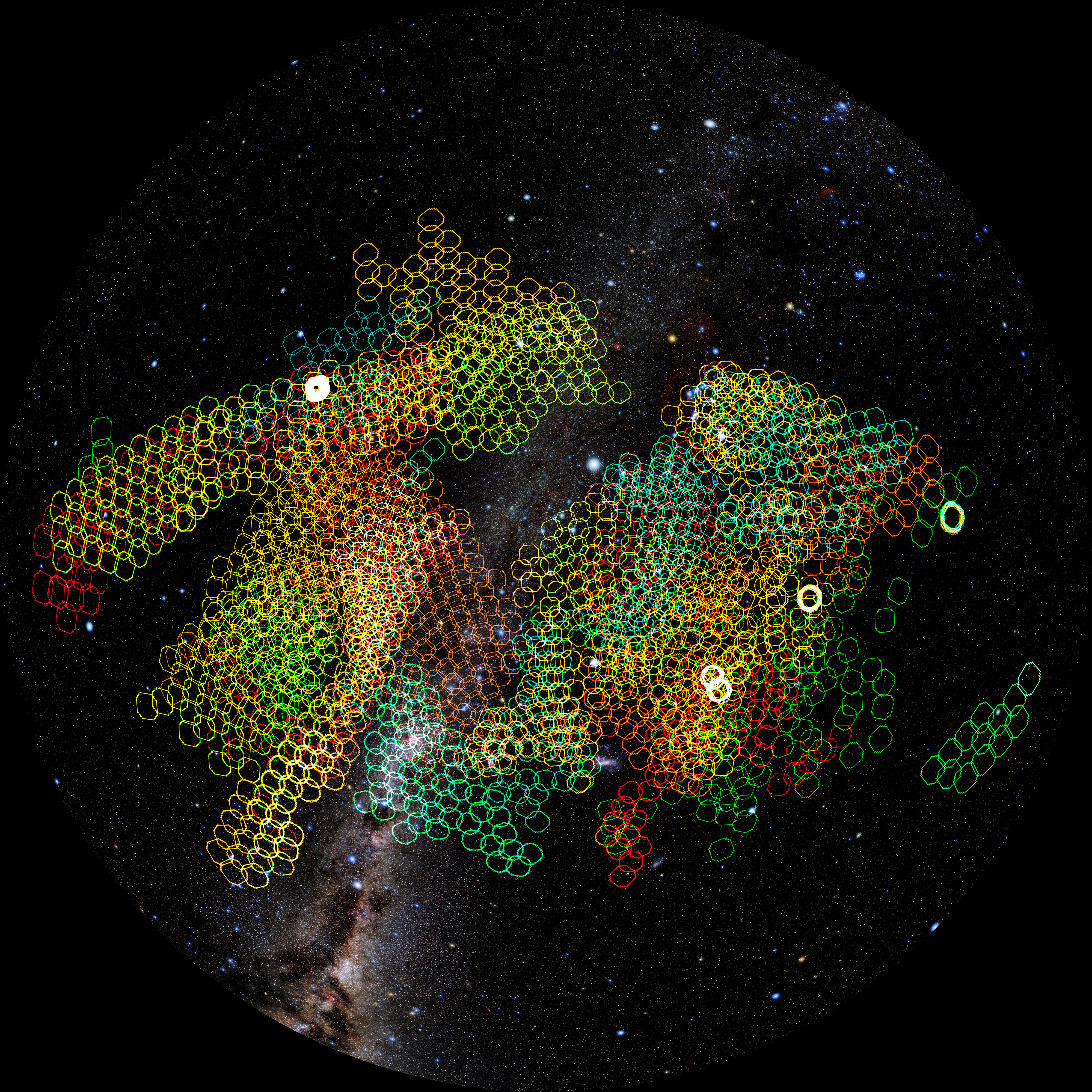
The IAC has been involved in drawing up the scientific collaboration agreements that will enable IAC research staff to use observing time on the Gran Telescopio Canarias (GTC), located at the Roque de los Muchachos Observatory (La Palma), to complement the scientific programmes associated with the LSST.
“The work carried out by the IAC has helped to establish collaboration between the centre and the LSST project, a partnership that will maximise the scientific return for both, by making the most of the quality of our skies in the Canary Islands and that of the GTC telescope,” explains Johan Knapen, a research professor at the IAC.
For his part, Ismael Pérez Fournon, also a researcher at the IAC, emphasises that “various teams at the institute have been preparing for years to make the most of the enormous volume of data that the observatory will generate across a wide range of fields in astrophysics”.
The areas of research in which the IAC is involved include the study of galaxies and dwarf galaxies, the structure of the Milky Way and the Local Group, stellar magnetic activity, observational cosmology, galaxy clusters, the detection of gravitational wave counterparts, the characterisation of small bodies in the Solar System and the monitoring of transient phenomena, amongst other fields.
Combining the capabilities of the Vera C. Rubin Observatory with those of other international astronomical facilities will provide the scientific community with an unprecedented dynamic view of the sky and enable it to tackle some of the major challenges facing contemporary astrophysics.
More information:
Contacts at the IAC:
Johan Knapen, johan.knapen [at] iac.es (johan[dot]knapen[at]iac[dot]es)
Ismael Pérez Fournon, ipf [at] iac.es (ipf[at]iac[dot]es)