
It may interest you
-
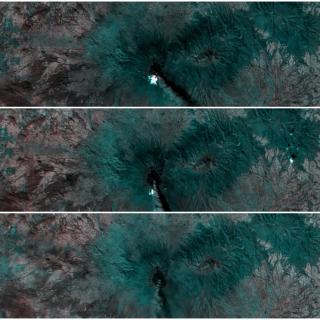 During commissioning the Canary satellite ALISIO-1 proves its efficiency by observing phenomena in over 100 regions of the world The first Canary satellite, led by the Instituto de Astrofísica de Canarias (IAC), ALISIO-1, (an acronym for Advanced Land-Imaging Satellite for Infrared Observations) was launched into space on December 1st 2023 from the Vandenberg Airforce Base in California, and in only a few months has completed the commissioning phase, the verification on orbit that all its systems are working correctly. In this phase of verification the DRAGO-2 camera has been calibrated, andAdvertised on
 -
 ESA’s Euclid space mission reveals its first full-colour images of the cosmos. Never before has a telescope been able to create such razor-sharp astronomical images across such a large patch of the sky, and looking so far into the distant Universe. These images illustrate the telescope's potential to create the largest and most accurate 3D map of the Universe to date. The Instituto de Astrofísica de Canarias (IAC) has led one of the first five Euclid Early Release Objects (ERO) programmes. 95% of our cosmos appears to be made of these mysterious ‘dark’ entities But we don’t understand whatAdvertised on
 -
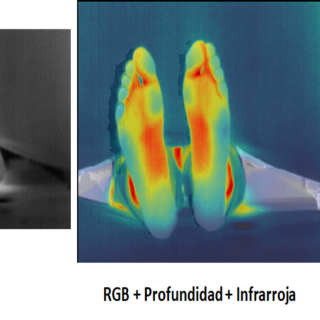 The technology which is used in astrophysics research is useful not only in space; many of the sophisticated techniques can be put to very good use in the field of medicine. On this basis in IACTEC there is a team of Medical Technology (TECMED) who develop combinations of the methods of Artificial Intelligence and Machine Learning used in astrophysics for the diagnosis of pathologies. To celebrate the International Day of Diabetes the team stresses the magnitude of the problema in the Islands. Some experts call diabetes one of the worst “silent pandemics”. Spain is the second country in theAdvertised on