
Last night, the 5,000 fibre-optic ‘eyes’ of the Dark Energy Spectroscopic Instrument (DESI) reached a major milestone, having fully covered the area originally planned for its map of the universe.
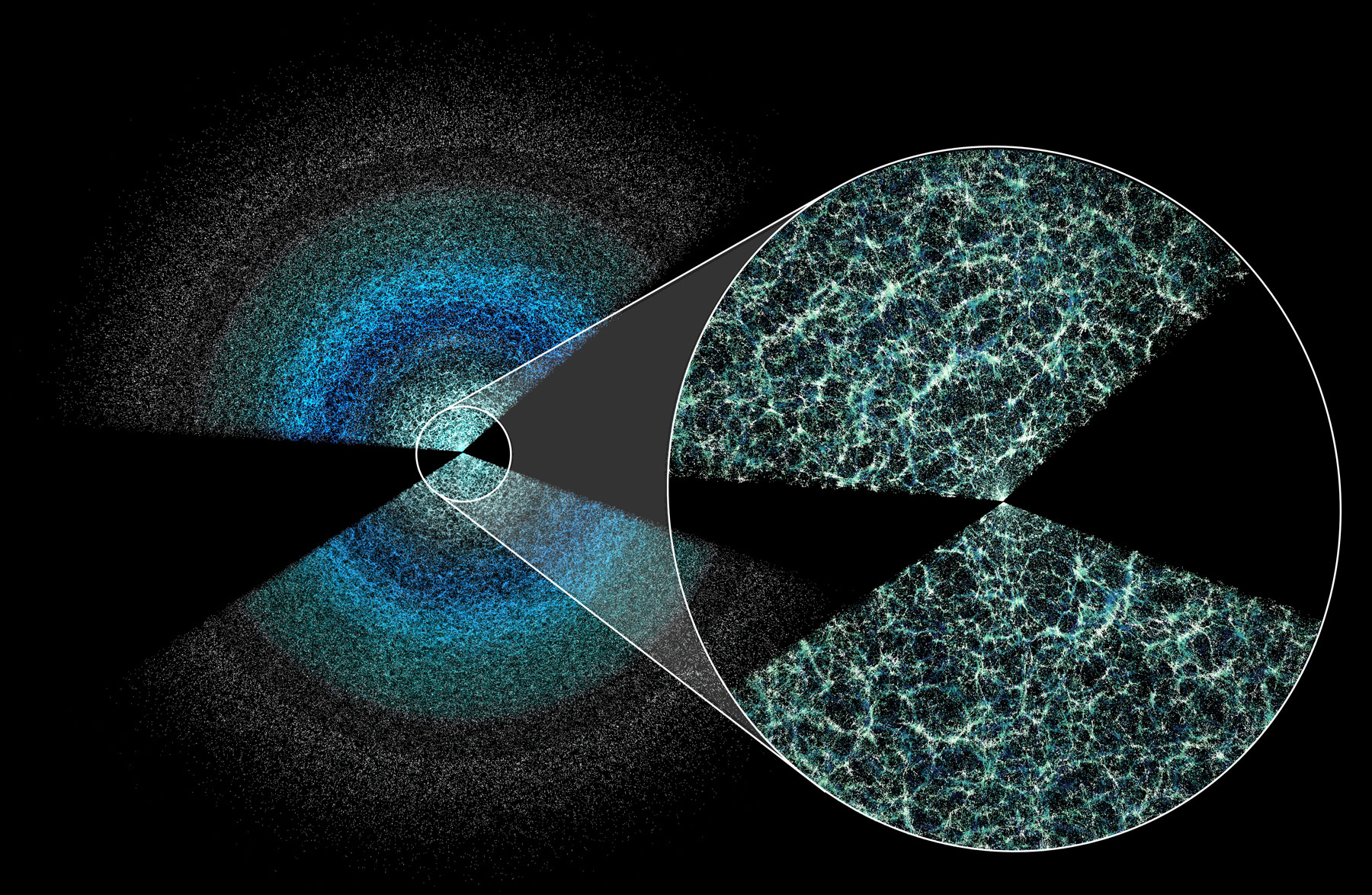
Thus, DESI’s five-year programme has concluded ahead of schedule and with far more data than expected, resulting in the largest high-resolution 3D map of the universe ever produced. This map will enable researchers to explore dark energy, which accounts for 70% of the universe and drives its accelerated expansion.
By comparing how galaxies were distributed in the past with their current distribution, researchers have traced the effect of dark energy across 11 billion years of cosmic history. Data from the first three years of DESI observations suggested that dark energy, previously thought to be a ‘cosmological constant’, might evolve over time. Now, with data from the full five years, researchers will have much more information to verify the preliminary results. If confirmed, our theories and the ultimate fate of the universe—which depends on the balance between matter and dark energy—would need to be revised.
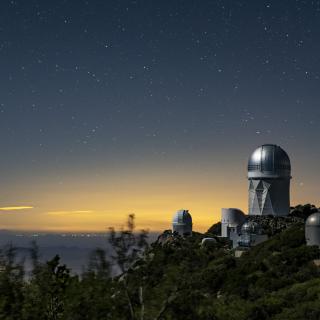
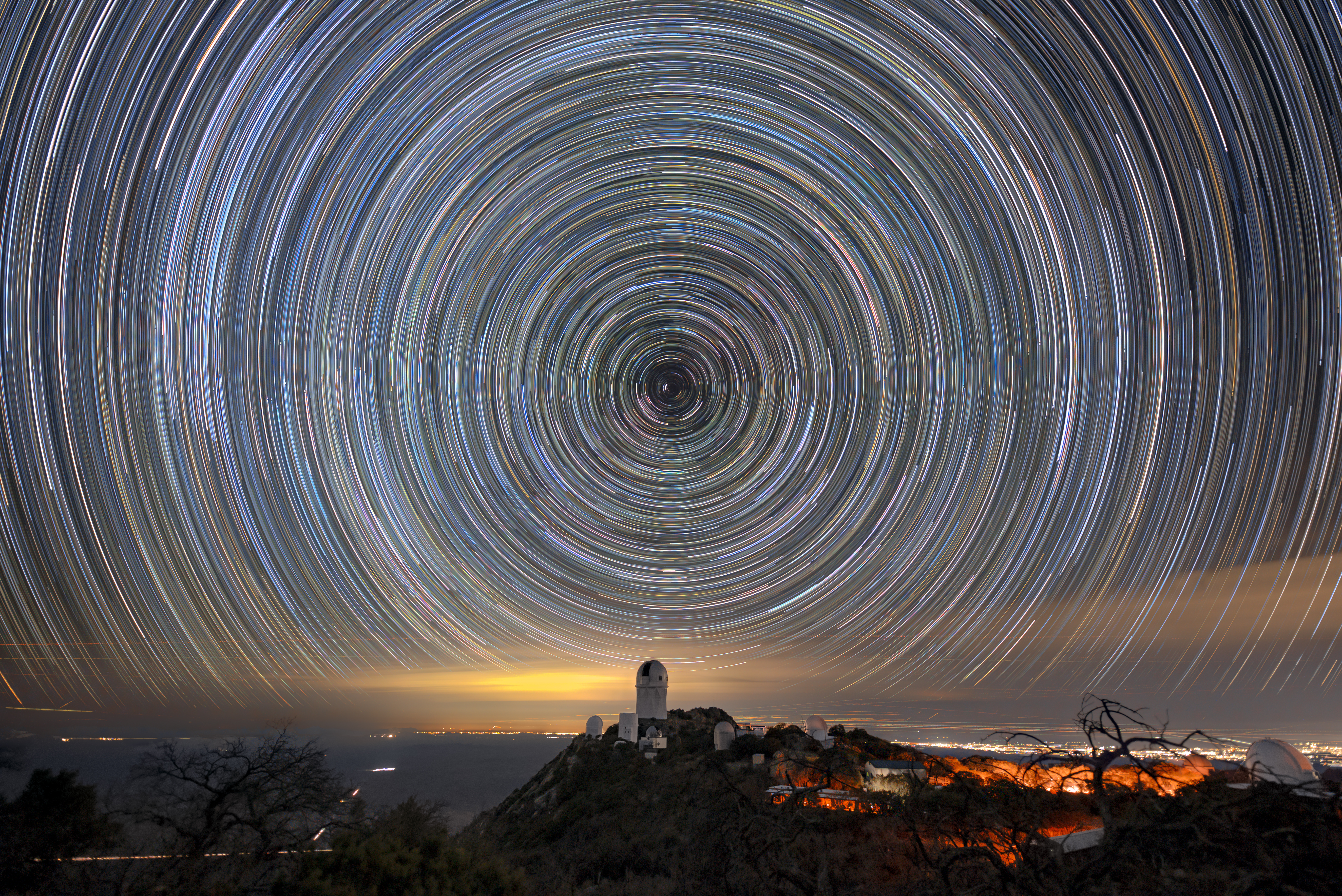
The DESI programme to understand dark energy is a global endeavour. This international experiment brings together the efforts of more than 900 researchers (including 300 PhD students) from over 70 institutions. The project is managed by the US Department of Energy’s (DOE) Lawrence Berkeley National Laboratory, and the instrument was built and is operated with funding from the DOE’s Office of Science. DESI is installed on the 4-metre Nicholas U. Mayall telescope at the Kitt Peak Observatory in Arizona.
At the Instituto de Astrofísica de Canarias (IAC), two teams are hard at work analysing the data. Francisco Kitaura, Ginevra Favole, Aurelio Carnero and Francesco Sinigaglia are focusing on understanding the information encoded in the distribution of galaxies measured by DESI, using numerical simulations. David Aguado, Guillaume Thomas and Carlos Allende Prieto, together with students Andrea Ruiz del Pozo, Daniel García Jiménez and Ruizhi Zhang, are combing through the massive collection of stellar spectra gathered by DESI to search for the first stars that formed in the Milky Way.
“The five-year DESI project has been a spectacular success,” says Michael Levi, director of DESI and a scientist at Berkeley Lab. “The instrument has performed better than we expected. The results have been incredible. And the size and coverage of the map, as well as how quickly we’ve been able to carry it out, are phenomenal,” he adds.
DESI has already collected cosmological data on six times as many galaxies and quasars as all previous projects combined. The collaboration will begin processing the entire dataset immediately and expects to publish its first results on dark energy in 2027.
An observing machine
DESI began collecting data in May 2021. Since then, the instrument has far exceeded the collaboration’s original targets. The project had hoped to collect light from 34 million galaxies and quasars over the course of the five-year project. But DESI has already observed more than 47 million galaxies and quasars, as well as 20 million stars.
“DESI is a complex but incredibly robust instrument, and it has been fascinating to integrate all its subsystems and see it operating flawlessly for such a long time,” says Connie Rockosi, co-principal investigator for the instrument and a professor at the University of California, Santa Cruz, and the University of California Observatories.
To produce the maps, the researchers use software designed specifically to optimise DESI’s observations and decide where to point the telescope at any given moment. Robotic positioners align the optical fibres with a precision of 10 micrometres, an error smaller than the width of a human hair. The fibres carry the light to ten identical spectrographs, which break the light into colours to determine the position of the objects, their speed and chemical composition.
The sky’s the limit
DESI will continue its observations until 2028, increasing the area of the map by 20%, from 14,000 square degrees to 17,000 (the entire sky covers 41,000 square degrees). The expanded map will cover parts of the sky that are more difficult to observe, such as areas near the plane of the Milky Way, where the presence of nearby, bright stars makes it difficult to observe more distant objects, or towards the south, where light is more heavily absorbed by the Earth’s atmosphere.
DESI is supported by the DOE’s Office of Science and by NERSC (USA). It also receives support from the US NSF, the UK STFC, the Gordon and Betty Moore Foundation, the Heising-Simons Foundation, the French CEA, the Mexican SECIHTI, the Spanish Ministry of Science, Innovation and Universities, and the member institutions of the Collaboration.
Contact at the IAC:
Carlos Allende, carlos.allende.prieto [at] iac.es (carlos[dot]allende[dot]prieto[at]iac[dot]es)