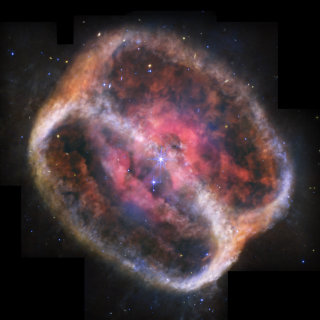

An international team, with participation from the University of La Laguna (ULL) and the Instituto de Astrofísica de Canarias (IAC), have, for the first time, captured a detailed snapshot of planetary systems in an era long shrouded in mystery. The study, called ALMA survey to Resolve exoKuiper belt Substructures (ARKS), is based on a series of 10 articles published simultaneously in the journal Astronomy and Astrophysics and was carried out using the Atacama Large Millimetre/submillimetre Array (ALMA). Thanks to this work, the sharpest images ever of 24 debris disks, the dusty belts left after planets finish forming, have been produced.
These disks are the cosmic equivalent of the teenage years for planetary systems—somewhat more mature than newborn, planet-forming disks, but not yet settled into adulthood. These findings from the ARKS project are invaluable for the search for young planets and for understanding how they form and reorganise into families, like the planets in our Solar System.
In this regard, Carlos del Burgo, researcher of ULL and IAC and ARKS team member, highlights the potential of the techniques developed in the study of young planetary systems: “ALMA continues revolutionizing our view of older, still immature planetary systems, revealing complex structures. With increasingly sharper observations, these can be combined with radial velocity measurements and transit light curves—for systems where planets cross in front of their stars—to better characterize these emerging worlds.”
For her part, Meredith Hughes, associate professor of astronomy at Wesleyan University (USA) and co-leader of this study, highlights the importance of the project: "We have often seen photos of the infancy of forming planets, but until now, adolescence was a missing link. This project gives us a new perspective for interpreting the craters on the Moon, the dynamics of the Kuiper Belt, and the growth of large and small planets. It's like adding the missing pages to the Solar System's family album."
The counterpart to this evolutionary phase in our Solar System is the Kuiper Belt, a ring of icy debris beyond Neptune that preserves a record of massive collisions and planetary migrations that occurred billions of years ago. This new study of 24 exoplanetary debris belts provides a better understanding of what the Solar System experienced as the Moon formed and the planets made their way to their final positions.
Teenage Disks
Debris disks are faint, hundreds or even thousands of times dimmer than the bright, gas-rich disks where planets are born. The ARKS team overcame these challenges and produced images of these disks in unprecedented detail. Like teenagers dodging the camera, these faint disks have managed to hide from astronomers for years. But, thanks to ALMA, astronomers can now see their complex structures: belts with multiple rings, wide smooth halos, sharp edges, and even unexpected arcs and clumps. "We’re seeing real diversity—not just simple rings, but multi-ringed belts, halos, and strong asymmetries, revealing a dynamic and violent chapter in planetary histories,” adds Sebastián Marino, program lead for ARKS, and an Associate Professor at the University of Exeter.
ARKS is the largest and highest-resolution study of debris discs to date, revealing that approximately one-third of the discs observed show clear substructures (multiple rings or distinctive gaps) that may have formed in earlier stages of planetary formation or were sculpted by planets over much longer timescales. While some discs inherit intricate structures, others smooth out and spread into broad belts, similar to how we expect the Solar System to have developed.
In addition, many discs show evidence of zones of calm and chaos, with vertically ‘swollen’ regions, similar to the mix of classical Kuiper Belt objects in our solar system and those scattered by Neptune's past migration. Several discs retain gas for much longer than expected. In some systems, the remaining gas may influence the chemical composition of growing planets, or even displace dust into broad halos. ARKS has shared this wealth of data with the entire community.
Implications
The ARKS results show this teenage phase is a time of transition and turmoil. “These disks record a period when planetary orbits were being scrambled and huge impacts, like the one that forged Earth’s Moon, were shaping young solar systems," says Luca Matrà, a co-PI on the survey, and Associate Professor at Trinity College Dublin.
The ARKS project is the work of an international team of approximately 60 scientists, led by the University of Exeter, Trinity College Dublin and Wesleyan University, with participation from the ULL and the IAC.
Articles:
Contact at the IAC/ULL:
Carlos del Burgo, cburgo [at] ull.edu.es (cburgo[at]ull[dot]edu[dot]es)