News

This section includes scientific and technological news from the IAC and its Observatories, as well as press releases on scientific and technological results, astronomical events, educational projects, outreach activities and institutional events.

  • Imagen del Cometa C/2025 A6 (Lemmon), captada el 23 de octubre desde el Observatorio del Teide / Daniel López y Alfred Rosenberg (IAC)
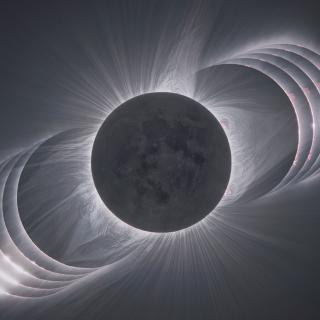
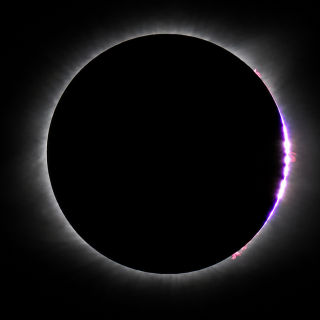
    El Instituto de Astrofísica de Canarias (IAC), a través de su Unidad de Comunicación y Cultura Científica (UC3) y en colaboración con el Museo de la Ciencia y el Cosmos (MCC), de Museos de Tenerife, publica las efemérides astronómicas para el año 2026 en su tradicional calendario. Este 2026 estará marcado por el eclipse total de Sol el 12 de agosto, que no será visible desde Canarias sino con una parcialidad del 70 por ciento. Además, 2026 viene acompañado de la llegada de nuevos cometas, lluvias de estrellas y otras interesantes citas astronómicas. El Calendario 2026 del IAC está ilustrado
    Advertised on
  • Un momento de la grabación del programa Soñando Estrellas / IAC
    Esta semana, "Soñando Estrellas", el espacio radiofónico del Instituto de Astrofísica de Canarias (IAC) que se emite en La Radio Canaria invita a descifrar los secretos de nuestra propia galaxia y a descubrir cómo el cielo se ha convertido en un motor económico para las islas en el capítulo 08. El programa, conducido por la periodista científica Verónica Martín, se emite este viernes 26 de diciembre a las 22:30 horas, ofreciendo una nueva entrega que combina ciencia de vanguardia con el talento joven de la Astrofísica. En este episodio 08, el programa cuenta con la participación de Carme
    Advertised on
  • Comparison between an observed galaxy (right) and a simulated galaxy (left) showing similarities in mass and size.
    A new study published in Astronomy & Astrophysics unveils a powerful way to determine the size of dark matter haloes—the massive, invisible structures that host galaxies—by simply measuring how large galaxies appear in deep astronomical images. Researchers Ignacio Trujillo and Claudio Dalla Vecchia, from the Instituto de Astrofísica de Canarias (IAC) and the Universidad de La Laguna (ULL), demonstrate that galaxy size can serve as a precise proxy for halo size, offering measurements up to six times more accurate than previous methods. Using the cutting-edge EAGLE cosmological simulations
    Advertised on
  • Giant galaxy M87 combining observations in visible light
    An international team of astronomers has captured the most detailed and completed view yet of the mysterious filaments surrounding the giant galaxy M87. Using new observations from the Gran Telescopio Canarias and the Canada-France-Hawaii Telescope, the study reveals how these long, thread-like structures move, evolve, and interact with their galactic environment and the activity of the central supermassive black hole. These findings have just been published in Monthly Notices of the Royal Astronomical Society. M87: a giant galaxy and its mysterious threads M87, located about 55 million
    Advertised on
  • dm_fig1
    Only a handful of observations truly constrain the nature of dark matter, which is why dozens of different physical models are still viable. Several of the most popular alternatives predict that dark matter halos slowly “thermalize” over time, gradually changing shape and expanding until they form a central region of nearly constant density -- a core. This transformation would not occur if the dark matter particles were completely collision-less, as assumed in the standard model. Therefore, the presence or absence of such a core provides a powerful way to distinguish between the standard
    Advertised on
  • Interstellar comet 3I/ATLAS
    The discovery, made in collaboration between the IAC Solar System Group and Light Bridges, reveals the rotation period of comet 3I/ATLAS The Two-metre Twin Telescope (TTT) has made a pioneering discovery in astronomy: the first detection of a jet of gas and dust and its periodic modulation in an interstellar comet, 3I/ATLAS. The study, published in the journal Astronomy & Astrophysics, provides the first evidence of localised activity from an interstellar nucleus, offering unique insight into the nature of a celestial body that formed outside our Solar System. An extraordinarily normal
    Advertised on