News

This section includes scientific and technological news from the IAC and its Observatories, as well as press releases on scientific and technological results, astronomical events, educational projects, outreach activities and institutional events.

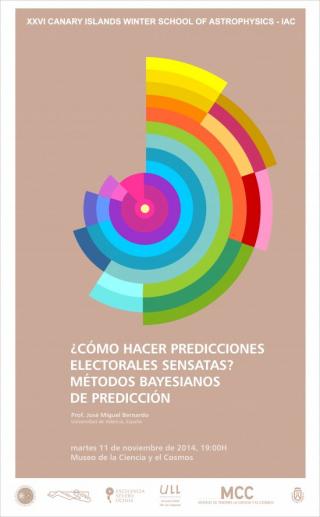
  • Ciclo de divulgación “Del Cielo a la Tesis”
    El ciclo de divulgación “Del Cielo a la Tesis” regresa este mes de febrero para acercar el trabajo de los jóvenes investigadores del Instituto de Astrofísica de Canarias (IAC) al público. En esta ocasión, la sesión se celebrará el próximo jueves 19 de febrero, en el Museo de la Ciencia y el Cosmos (MCC) del Organismo Autónomo de Museos y Centros del Cabildo de Tenerife. Eso sí, esta vez cambiará de horario y la sesión dará comienzo a las 17:00h. La jornada contará con dos ponencias centradas en la Astrofísica de altas energías y la búsqueda de respuestas sobre los componentes invisibles del
    Advertised on
  • Artistic view of the system Swift J1357.2-0933. The vertical structure present in the inner accretion disc produces the optical dips with a periodicity of a few minutes whereas the orbital period is 2.8h. G. Pérez (SMM/IAC).
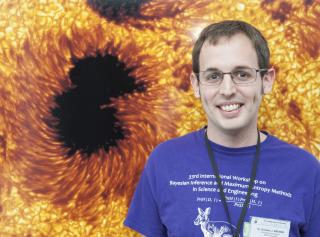
    Stellar-mass black holes (BHs) are mostly found in X-ray transients, a subclass of X-ray binaries that exhibit violent outbursts. None of the ~50 galactic BHs known show eclipses, which is surprising for a random distribution of inclinations. Swift J1357.2−093313 is a very faint X-ray transient detected in 2011 by the Swift telescope. Our spectroscopic evidences show that it contains a BH in a 2.8h orbital period. High-time resolution optical light curves display profound dips of up to 0.8 mag (50% of the optical flux) in 2min without X-ray counterparts. The observed properties are best
    Advertised on
  • (a) Visible spectra of DA14 obtained with CAFOS at the 2.2m CAHA telescope (black) and OSIRIS at GTC (red). Filled circles are the reflectance R values obtained from the fotometry. (b) Same as the top panel, but adding the R values for the near-infrared.
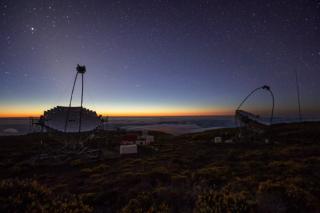
    Near-Earth asteroid 2012 DA 14 made its closest approach on February 15, 2013, when it passed at a distance of 27,700 km from the Earth’s surface. It was the first time an asteroid of moderate size was predicted to approach that close to the Earth, becoming bright enough to permit a detailed study from ground-based telescopes. Asteroid 2012 DA 14 was poorly characterized before its closest approach. The main objective of this work was to obtain new and valuable data to better understand its physical properties, and to evaluate the effects of such a close approach on the object. We acquired
    Advertised on
  • Fig. 1: Top panel: orbital phase shift at the time of the inferior conjunction (orbital phase 0), Tn, of the secondary star in the BHXB XTE J1118+480 versus the orbital cycle number, n, folded on the best-fit parabolic fit. The error bars give the observa
    We present new 10.4 m-GTC/OSIRIS spectroscopic observations of the black hole X-ray binary XTE J1118+480 that confirm the orbital period decay at (dP/dt) = −1.90 ± 0.57 ms yr −1. This corresponds to a period change of −0.88 ± 0.27 μs per orbital cycle. We have also collected observations of the black hole X-ray binary A0620–00 to derive an orbital period derivative of (dP/dt)= −0.60 ± 0.08 ms yr −1 (−0.53 ± 0.07 μs/cycle). Angular momentum losses due to gravitational radiation are unable to explain these large orbital decays in these two short- period black hole binaries. The orbital period
    Advertised on