This section includes scientific and technological news from the IAC and its Observatories, as well as press releases on scientific and technological results, astronomical events, educational projects, outreach activities and institutional events.

Displaying 1 - 6 of 279
Advertised on
  • “UNDARK 2026: Illuminating Cosmic Discord” TEAM
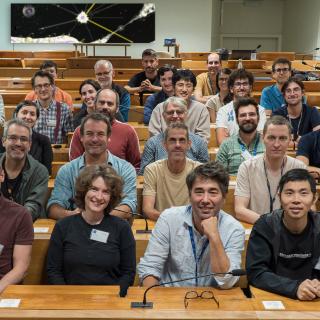
    The Instituto de Astrofísica de Canarias (IAC), through the European UNDARK project and together with CERN, has brought together international experts in cosmology, astrophysics and theoretical physics to analyse some of the discrepancies that are challenging our current understanding of the Universe. The aim is to determine whether they arise from effects in the observations that are not yet fully understood, or whether they conceal unknown physical phenomena still waiting to be discovered. We know more about the Universe than at any other time in history, and we can measure some of its
    Advertised on
  • Collage showing the September 2026 cover of Astronomía magazine, pages from its UNDARK feature article, and science journalist Thomas Villa.
    The European project led by the Instituto de Astrofísica de Canarias (IAC) is featured on the cover of issue 327, the September 2026 edition of Astronomía magazine, with an extensive feature exploring the search for answers about the dark universe. We’re on the cover! And for UNDARK, this is a wonderful opportunity to bring some of the most fascinating questions in science today beyond laboratories and observatories and closer to society. Under the title “Shedding Light on the Dark Cosmos,” Astronomía dedicates its cover and an extensive eight-page feature to UNDARK ( Unravelling the Dark
    Advertised on
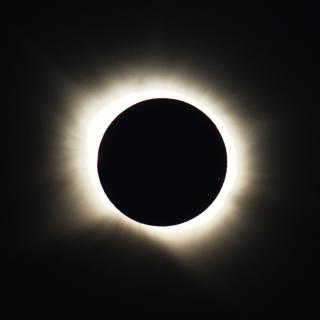
  • Imagen del eclipse total de Sol tomada desde Borobia (Soria) el 12 de agosto de 2026
    Investigadoras, investigadores y personal técnico del Instituto de Astrofísica de Canarias participaron en actividades de observación, divulgación y formación en distintas localidades españolas durante el eclipse del 12 de agosto. El Instituto de Astrofísica de Canarias (IAC) desplegó el pasado 12 de agosto equipos científicos y técnicos en distintos puntos de la Península para participar en la observación y divulgación del eclipse solar total. Además de la actividad central desarrollada en Palencia en el marco del proyecto internacional NATE (North African Telescope Eclipse), personal del
    Advertised on
  • Imagen de la corona solar en el eclipse total de Sol del 12 de agosto tomada en Palencia / Santiago Torres
    After months of work, the Canary Islands Institute of Astrophysics (IAC) successfully concluded its scientific, outreach, and educational program in Palencia, where thousands of people enjoyed the total solar eclipse on August 12, 2026. The program, designed jointly by the IAC and the Palencia City Council, filled the streets and theaters throughout the province. This historic event concluded with a high turnout. Thousands of people—including locals and visitors from all over the world—packed the viewing areas set up in Palencia to enjoy a once-in-a-lifetime astronomical spectacle live. The
    Advertised on
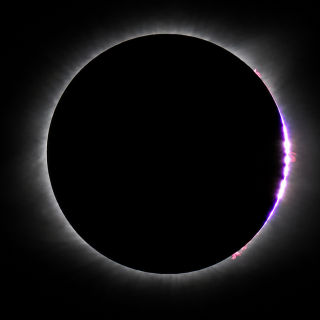
  • Perlas de Baily durante un eclipse total de Sol. El 12 de agosto, desde Canarias el eclipse será parcial, con cerca del 70 % del Sol oculto
    El próximo 12 de agosto, España vivirá uno de los acontecimientos astronómicos más extraordinarios de las últimas décadas. En Canarias, el eclipse permitirá observar aproximadamente del 70 al 75 % en las Islas Canarias, ofreciendo una oportunidad excepcional para disfrutar de este fenómeno desde el archipiélago. Con motivo de este esperado evento, el Instituto de Astrofísica de Canarias (IAC) ofrece una serie de recomendaciones para ayudar a la ciudadanía a planificar su observación de forma segura, elegir las mejores localizaciones desde las que contemplarlo y disfrutar plenamente de una
    Advertised on
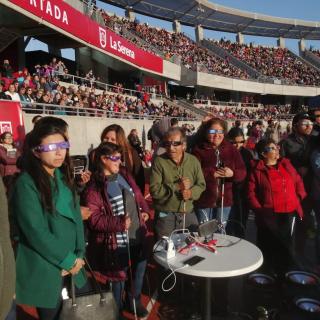
  • A group of people with visual impairments experiencing a total solar eclipse
    As part of the program of initiatives that the IAC—in collaboration with the Palencia City Council and with the support of the Canary Islands Government, and as part of its NATE project—will carry out in Palencia to mark the total solar eclipse on August 12, people with visual impairments will be offered the opportunity to follow the event through the Inclusive Eclipse project of the Institute of Space Sciences (ICE-ISIC). This option will be available at a designated location on the grounds of the Cristo del Otero monument. In this sound art space, anyone can enjoy the eclipse through sound
    Advertised on