News

This section includes scientific and technological news from the IAC and its Observatories, as well as press releases on scientific and technological results, astronomical events, educational projects, outreach activities and institutional events.

Displaying 1 - 6 of 2987
Advertised on
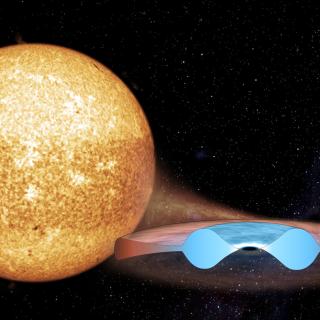
  • Artist’s impression of MAXI J0637−430 during an eruption
    When MAXI J0637−430, a binary system containing a black hole, began to fade after a major outburst, something unexpected happened: the outer regions of its disc became more illuminated, rather than less. A study published in Nature Astronomy, led by Montserrat Armas Padilla, a researcher at the Instituto de Astrofísica de Canarias, has revealed that this behaviour is due to changes in the shape of the inner part of the disc, which can cast a shadow over the regions furthest from the black hole. During the brightest phase of the outburst, this structure had swollen, blocking some of the
    Advertised on
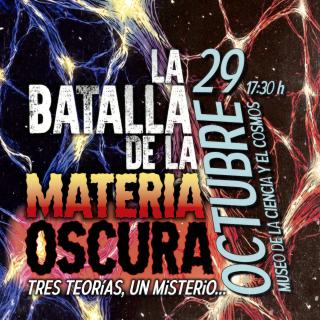
  • La_Batalla_de_la_Materia_Oscura_CARTEL
    The invisible side of the Universe sends shivers down our spines this Halloween at the Museum of Science and the Cosmos. The IAC, through the UNDARK project, and the Museum of Science and the Cosmos are organising “ The Battle of Dark Matter. Three Theories, One Mystery”, a spine-chilling gathering featuring scientific debate and interactive questions from the audience. This eerie encounter will take place on 29 October at 17:30 at the Museum of Science and the Cosmos, to mark Dark Matter Day, celebrated internationally on 31 October. A mysterious web of unanswered questions surrounds the
    Advertised on
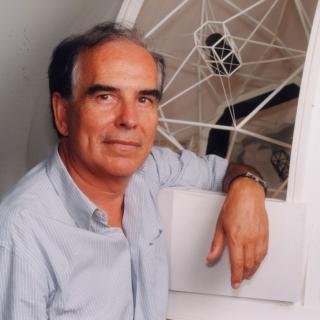
  • Francisco Sánchez
    El Instituto de Astrofísica de Canarias (IAC) conmemora el primer aniversario del fallecimiento de su director fundador, el profesor Francisco Sánchez Martínez, quien con su tesón logró crear uno de los centros de investigación más punteros de Europa y dos de los mejores observatorios astrofísicos del mundo: el Observatorio del Teide, en Tenerife, y el Observatorio del Roque de los Muchachos, en La Palma. Transcurrido un año desde su pérdida en Madrid a los 89 años de edad, la dirección del centro y la familia del IAC rinden tributo a la memoria del pionero que abrió camino a la astrofísica
    Advertised on
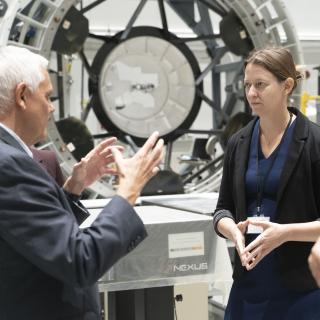
  • Bethany Ehlmann junto al director del IAC, Valentín Martínez Pillet, durante la visita a las instalaciones del IAC
    El Instituto de Astrofísica de Canarias (IAC) ha recibido la visita de Bethany Ehlmann, directora del Laboratory for Atmospheric and Space Physics (LASP) de la Universidad de Colorado Boulder (Estados Unidos), con el objetivo de explorar nuevas oportunidades de colaboración científica y tecnológica en el marco de un acuerdo de entendimiento o MOU (siglas en inglés de Memorandum of Understanding ), entre ambas instituciones. Durante la visita, Ehlmann ha conocido las instalaciones de investigación e instrumentación del IAC, acompañada por el director del Instituto, Valentín Martínez Pillet, y
    Advertised on
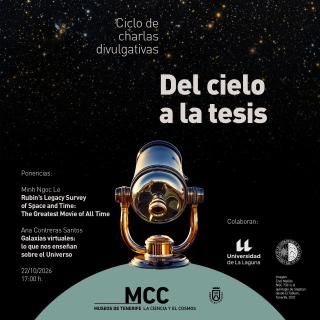
  •  Del Cielo a la Tesis - 22 de octubre de 2026
    La próxima sesión del ciclo divulgativo tendrá lugar el jueves 22 de octubre, a las 17:00 horas, en el Museo de la Ciencia y el Cosmos, con dos charlas sobre las nuevas formas de estudiar el universo. El ciclo "Del Cielo a la Tesis", una iniciativa de divulgación científica que acerca al público las investigaciones desarrolladas en el ámbito de la astrofísica, celebrará una nueva sesión el próximo jueves 22 de octubre, a las 17:00 horas, en el Museo de la Ciencia y el Cosmos, del Cabildo de Tenerife. En esta ocasión, las investigadoras Minh Ngoc Le y Ana Contreras Santos compartirán sus
    Advertised on
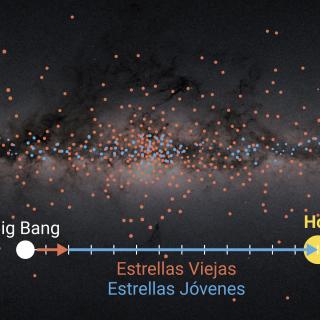
  • Distribution and arrangement of stars in the Milky Way’s disc
    An international team, led by a pre-doctoral researcher at the Instituto de Astrofísica de Canarias (IAC), has discovered with great precision how the Milky Way’s disc became flattened. Using data from the Gaia satellite and thanks to the precise ages derived by the ChronoGal project, the researchers have identified two stages: a very rapid thinning that ended around 10.8 billion years ago, and a much slower process that continues to the present day. The study is published in The Astrophysical Journal Letters. Most of the stars in the Milky Way are distributed across two discs: a thin, young
    Advertised on