
Bibcode
Weisz, D. R.; Skillman, Evan D.; Hidalgo, S. L.; Monelli, M.; Dolphin, Andrew E.; McConnachie, Alan; Bernard, Edouard J.; Gallart, C.; Aparicio, A.; Boylan-Kolchin, Michael; Cassisi, Santi; Cole, Andrew A.; Ferguson, Henry C.; Irwin, Mike; Martin, Nicolas F.; Mayer, Lucio; McQuinn, Kristen B. W.; Navarro, Julio F.; Stetson, Peter B.
Bibliographical reference
The Astrophysical Journal, Volume 789, Issue 1, article id. 24, 6 pp. (2014).
Advertised on:
7
2014
Journal
Citations
48
Refereed citations
40
Description
We present the first comparison between the lifetime star formation
histories (SFHs) of M31 and Milky Way (MW) satellites. Using the
Advanced Camera for Surveys on board the Hubble Space Telescope, we
obtained deep optical imaging of Andromeda II (And II; MV =
-12.0 log(M sstarf/M ⊙) ~ 6.7) and
Andromeda XVI (And XVI; MV = -7.5 log(M
sstarf/M ⊙) ~ 4.9) yielding color-magnitude
diagrams that extend at least 1 mag below the oldest main-sequence
turnoff, and are similar in quality to those available for the MW
companions. And II and And XVI show strikingly similar SFHs: both formed
50%-70% of their total stellar mass between 12.5 and 5 Gyr ago (z ~
5-0.5) and both were abruptly quenched ~5 Gyr ago (z ~ 0.5). The
predominance of intermediate age populations in And XVI makes it
qualitatively different from faint companions of the MW and clearly not
a pre-reionization fossil. Neither And II nor And XVI appears to have a
clear analog among MW companions, and the degree of similarity in the
SFHs of And II and And XVI is not seen among comparably faint-luminous
pairs of MW satellites. These findings provide hints that satellite
galaxy evolution may vary substantially among hosts of similar stellar
mass. Although comparably deep observations of more M31 satellites are
needed to further explore this hypothesis, our results underline the
need for caution when interpreting satellite galaxies of an individual
system in a broader cosmological context.
Based on observations made with the NASA/ESA Hubble Space Telescope,
obtained at the Space Telescope Science Institute, which is operated by
the Association of Universities for Research in Astronomy, Inc., under
NASA contract NAS 5-26555. These observations are associated with
program #13028.
Related projects
Milky Way and Nearby Galaxies
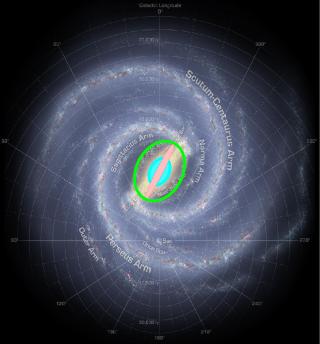
The overall aim of the project is to study the morphology, stellar populations, kinematics and dynamics (including formation and evolution) of the Milky Way and its satellite galaxies and other Local Group galaxies. The project can be divided into two main lines: I. Structure of the Milky Way and nearby galaxies. The detailed study of the
Martín
López Corredoira
Galaxy Evolution in the Local Group
Galaxy formation and evolution is a fundamental Astrophysical problem. Its study requires “travelling back in time”, for which there are two complementary approaches. One is to analyse galaxy properties as a function of red-shift. Our team focuses on the other approach, called “Galactic Archaeology”. It is based on the determination of galaxy
Emma
Fernández Alvar