
Bibcode
Skillman, E. D.; Monelli, M.; Weisz, Daniel R.; Hidalgo, S. L.; Aparicio, A.; Bernard, Edouard J.; Boylan-Kolchin, Michael; Cassisi, Santi; Cole, Andrew A.; Dolphin, Andrew E.; Ferguson, Henry C.; Gallart, C.; Irwin, Mike J.; Martin, Nicolas F.; Martínez-Vázquez, C. E.; Mayer, Lucio; McConnachie, Alan W.; McQuinn, Kristen B. W.; Navarro, Julio F.; Stetson, Peter B.
Bibliographical reference
The Astrophysical Journal, Volume 837, Issue 2, article id. 102, 23 pp. (2017).
Advertised on:
3
2017
Journal
Citations
109
Refereed citations
99
Description
The Initial Star formation and Lifetimes of Andromeda Satellites
(ISLAndS) project employs Hubble Space Telescope imaging to study a
representative sample of six Andromeda dSph satellite companion
galaxies. Our main goal is to determine whether the star formation
histories (SFHs) of the Andromeda dSph satellites demonstrate
significant statistical differences from those of the Milky Way (MW).
Our deep observations yield a time resolution at the oldest ages of
∼1 Gyr, allowing meaningful comparisons to the MW satellites. The
six dSphs present a variety of SFHs (e.g., a significant range in
quenching times, {τ }q, from 9 to 6 Gyr ago) that are not
strictly correlated with luminosity or present distance from M31. In
agreement with observations of MW companions of similar mass, there is
no evidence of complete quenching of star formation by the cosmic UV
background responsible for reionization, but the possibility of a degree
of quenching at reionization cannot be ruled out. We do not find
significant differences between the SFHs of the members and non-members
of the vast, thin plane of satellites. The SFHs of the ISLAndS M31 dSphs
appear to be more uniform than those of the MW dSphs. Specifically, the
primary difference between the SFHs of the ISLAndS dSphs and MW dSph
companions of similar luminosities and host distances is the absence of
late-quenching ({τ }q≤slant 5 {Gyr}) dSphs in the
ISLAndS sample. Thus, models that can produce satellite populations with
and without late-quenching satellites are of extreme interest.
Based on observations made with the NASA/ESA Hubble Space Telescope,
obtained at the Space Telescope Science Institute, which is operated by
the Association of Universities for Research in Astronomy, Inc., under
NASA contract NAS 5-26555. These observations are associated with
programs #13028, 13739.
Related projects
Milky Way and Nearby Galaxies
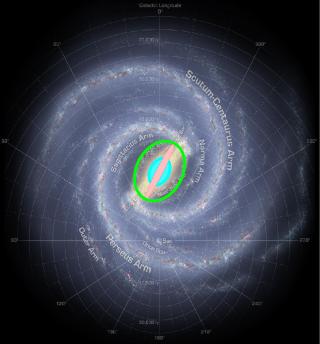
The overall aim of the project is to study the morphology, stellar populations, kinematics and dynamics (including formation and evolution) of the Milky Way and its satellite galaxies and other Local Group galaxies. The project can be divided into two main lines: I. Structure of the Milky Way and nearby galaxies. The detailed study of the
Martín
López Corredoira
Galaxy Evolution in the Local Group
Galaxy formation and evolution is a fundamental Astrophysical problem. Its study requires “travelling back in time”, for which there are two complementary approaches. One is to analyse galaxy properties as a function of red-shift. Our team focuses on the other approach, called “Galactic Archaeology”. It is based on the determination of galaxy
Emma
Fernández Alvar