News

This section includes scientific and technological news from the IAC and its Observatories, as well as press releases on scientific and technological results, astronomical events, educational projects, outreach activities and institutional events.

  • Antonia Varela / IAC
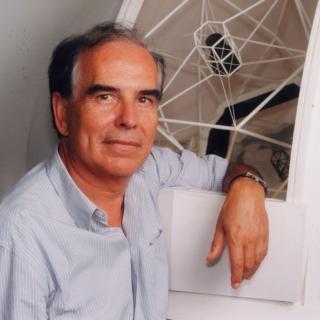
    La doctora Antonia Varela Pérez, investigadora del Instituto de Astrofísica de Canarias (IAC), ha sido incluida en la prestigiosa lista " Forbes Women: Las 30 mujeres más influyentes de Canarias 2026", una distinción que pone en valor su trayectoria científica y su labor en la protección del cielo nocturno y la divulgación del conocimiento. Antonia Varela, quien además de su labor investigadora en el IAC dirige la Fundación Starlight y el Museo de la Ciencia y el Cosmos de Tenerife, destaca en este ranking por su liderazgo en el ámbito del desarrollo sostenible y el astroturismo
    Advertised on
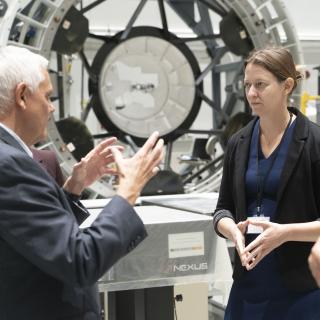
  • Main structure of the SELF Telescope, which serves as a technological prototype for the ExoLife Finder (ELF) Telescope.
    The Instituto de Astrofísica de Canarias (IAC) continues to make progress in the construction of the SELF (Small ExoLife Finder) telescope with the arrival of its mechanical structure at the IACTec facilities. The structure, shipped from the Basque Country, marks a new milestone in the development of this scientific and technological project. The assembly has been received at the IACTec Building, located in the Las Mantecas Science and Technology Park (La Laguna, Santa Cruz de Tenerife), a strategic site dedicated to the design, integration and validation of advanced astronomical
    Advertised on
  • Sebastián Francisco Sánchez / IAC
    El consorcio internacional Sloan Digital Sky Survey-V (SDSS-V) ha nombrado al doctor Sebastián Francisco Sánchez, investigador del Instituto de Astronomía de la Universidad Nacional Autónoma de México y científico titular en excedencia del Instituto de Astrofísica de Canarias (IAC), como director del proyecto Local Volume Mapper (LVM), uno de los tres muestreos que configuran el SDSS-V. Este nombramiento reconoce la excelencia académica del doctor Sánchez y consolida la colaboración con el IAC, con la que el investigador mantiene desde hace años una estrecha colaboración científica. El Dr
    Advertised on
  • Eva Villaver Sobrino / IAC
    Eva Villaver, Deputy Director of the Instituto de Astrofísica de Canarias (IAC), has been appointed by the European Space Agency (ESA) to the Space Science Advisory Committee (SSAC), the highest advisory body to ESA's Director of Science on all matters related to the organization's mandatory science program. This role complements Dr. Villaver's duties as Deputy Director of the IAC. The SSAC carries out a strategic oversight role, sitting above the specialized working groups in areas such as astronomy or solar system exploration. Furthermore, it is responsible for issuing recommendations on
    Advertised on
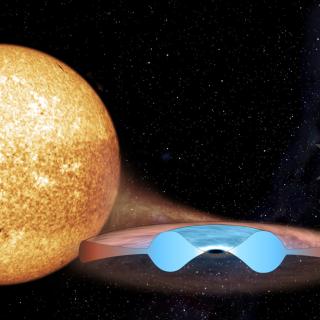
  • Artistic impression of a runaway star propelled by a supernova explosion
    Researchers from the Instituto de Astrofísica de Canarias (IAC), in collaboration with the Instituto de Ciencias del Cosmos de la Universidad de Barcelona (ICCUB) and the Instituto de Estudios Espaciales de Cataluña (IEEC), have carried out the largest observational study to date on massive runaway stars including rotation and binarity in the Milky Way. This work, recently published in Astronomy & Astrophysics , sheds light on how these stellar “fugitives” are launched into space and what their properties reveal about their intriguing origins. Runaway stars are stars that travel through
    Advertised on
  • MIT Astronomy Field Camp 2026
    Este enero, el Instituto de Astrofísica de Canarias ha acogido, por cuarta vez, el MIT Astronomy Field Camp , el histórico campamento científico que el Massachusetts Institute of Technology (MIT), considerada una de las mejores y más influyentes universidades a nivel mundial, ofrece a sus estudiantes de ciencias planetarias y astronomía con el objetivo de proporcionarles la experiencia real de trabajar en un observatorio profesional. En esta ocasión, nueve estudiantes han estado durante tres semanas en el Observatorio del Teide, en Tenerife, donde han realizado distintas observaciones
    Advertised on