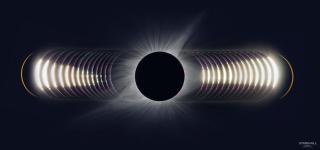
Total solar eclipses do not occur very often in the same location within a single human lifetime, but they do tend to cluster together, so that more than one can occur within a few years. This is what will happen in Spain this year, next year, and in 2028, when there will be two total eclipses and one annular eclipse. A sequence similar to that which occurred in 1900, 1905, and 1912, when three total solar eclipses were concentrated—although in the case of the last one, totality lasted only a few seconds and was visible in a very narrow strip of land that ran through Galicia and part of León, emerging in Asturias.
Eclipses have always been major events, but the way they are experienced has evolved alongside our understanding of how they occur and the safety precautions required when observing them. Their impact, too, has moved beyond considerations rooted in religion or superstition to become phenomena that are not only astronomical but also social, tourist-related, and even economic. In this regard, we will focus on two of the eclipses experienced in Spain over the past two hundred years, which in a way foreshadow what we will experience on August 12.
1860: When Spain Summoned the Great Astronomers
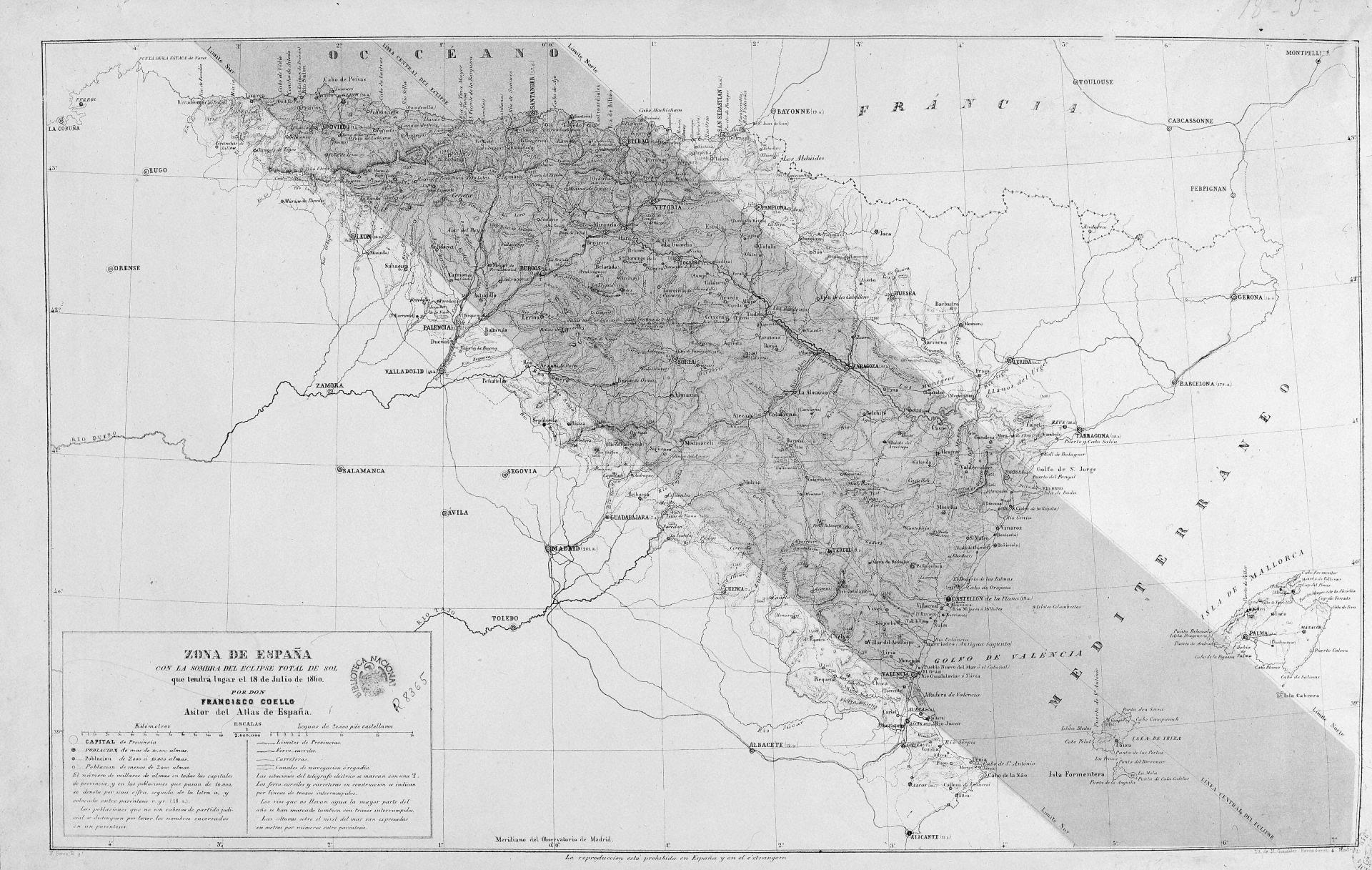
The total solar eclipse that took place on July 18, 1860, was a significant opportunity for those within Spain who were striving for modernization and integration with the scientific advancements then taking place in Europe. It is therefore not surprising that it became a matter of state, leading to the creation of a government commission to coordinate all efforts and invite international collaboration, as well as an observation guide—including a list of precautions to follow—prepared by the Royal Observatory of Madrid.
It was a unique opportunity because, although the path of totality was set to stretch from North America to Spain, Tunisia, Libya, Egypt, Sudan, and Eritrea, the fact that ours was the only European country where the eclipse would be visible from numerous populated areas made us a coveted destination for the continent’s leading scientists. Furthermore, advances in photographic techniques, with the invention of the Kew photoheliograph by the British scientist Warren de la Rue, aimed to finally resolve the mystery of the nature of solar prominences: were they something originating from the Sun itself, or some kind of optical illusion produced by our atmosphere at the moment of totality?
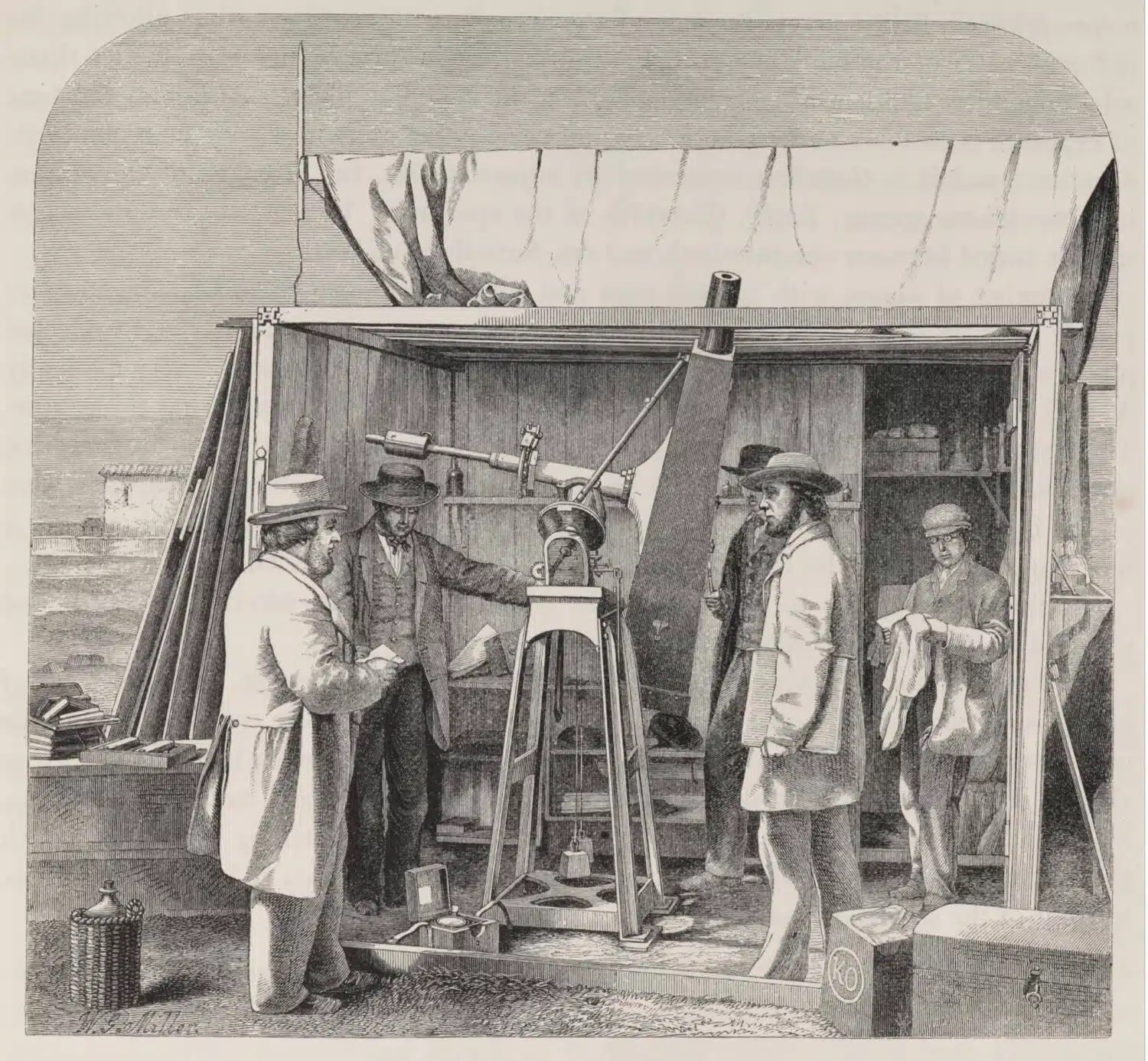
So it’s no surprise that De la Rue himself led an expedition that set up its headquarters in the town of Ribabellosa (Alava), where they had the mayor’s support in securing a plot of land right in the middle of harvest season. There, De la Rue and his team set up a prefabricated hut that had come with them on the ship that had taken them from Plymouth to Bilbao. The mayor’s intervention helped ensure that the crowd, which had gathered to watch those curious visitors and their work with the telescopes, eventually gave them enough space to work in peace.
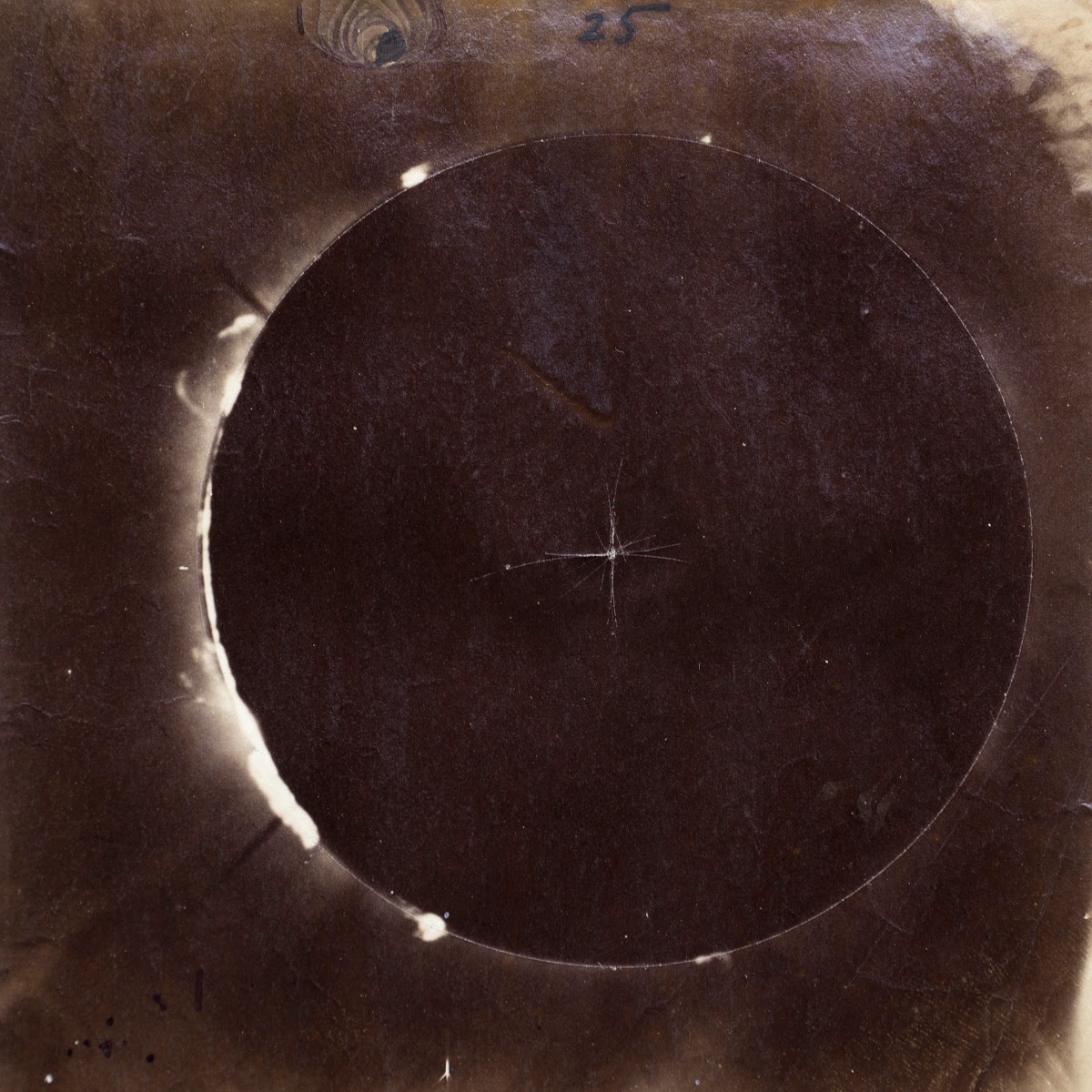
The effort was worth it. Of all the photos taken during the eclipse, two were taken during the minutes of totality. When they compared them with others taken several hundred kilometers away, they saw that the shape of the corona was identical, which settled the debate: the origin of the prominences was on the Sun, as we now know. These photos were not the first ever taken of the corona, but they were the highest quality ones to date, and they are considered definitive proof.
However, although this expedition left the most enduring legacy, it was actually just one of some thirty expeditions, representing eleven different nationalities, that observed the eclipse from our country. And reviewing the list of names of those who visited us is almost like reviewing the history of 19th-century European astronomy, as we find the director of the Roman College Observatory, the Jesuit Angelo Secchi, who set up camp in the Desierto de las Palmas Natural Park (Castellón), or the first expedition from the Russian Academy of Sciences, led by the director of the Pulkovo Observatory, Otto Wilhelm von Struve.
That said, perhaps the most famous were the French members of the Franco-Spanish expedition that observed the eclipse from Mount Moncayo, including Urbain Le Verrier, director of the Paris Observatory and one of the discoverers of Neptune; and Léon Foucault, one of those rare figures in science whose name has entered popular consciousness, as he was the inventor of the pendulum that adorns so many museums around the world.
1905: The Eclipse That Became a Social Phenomenon
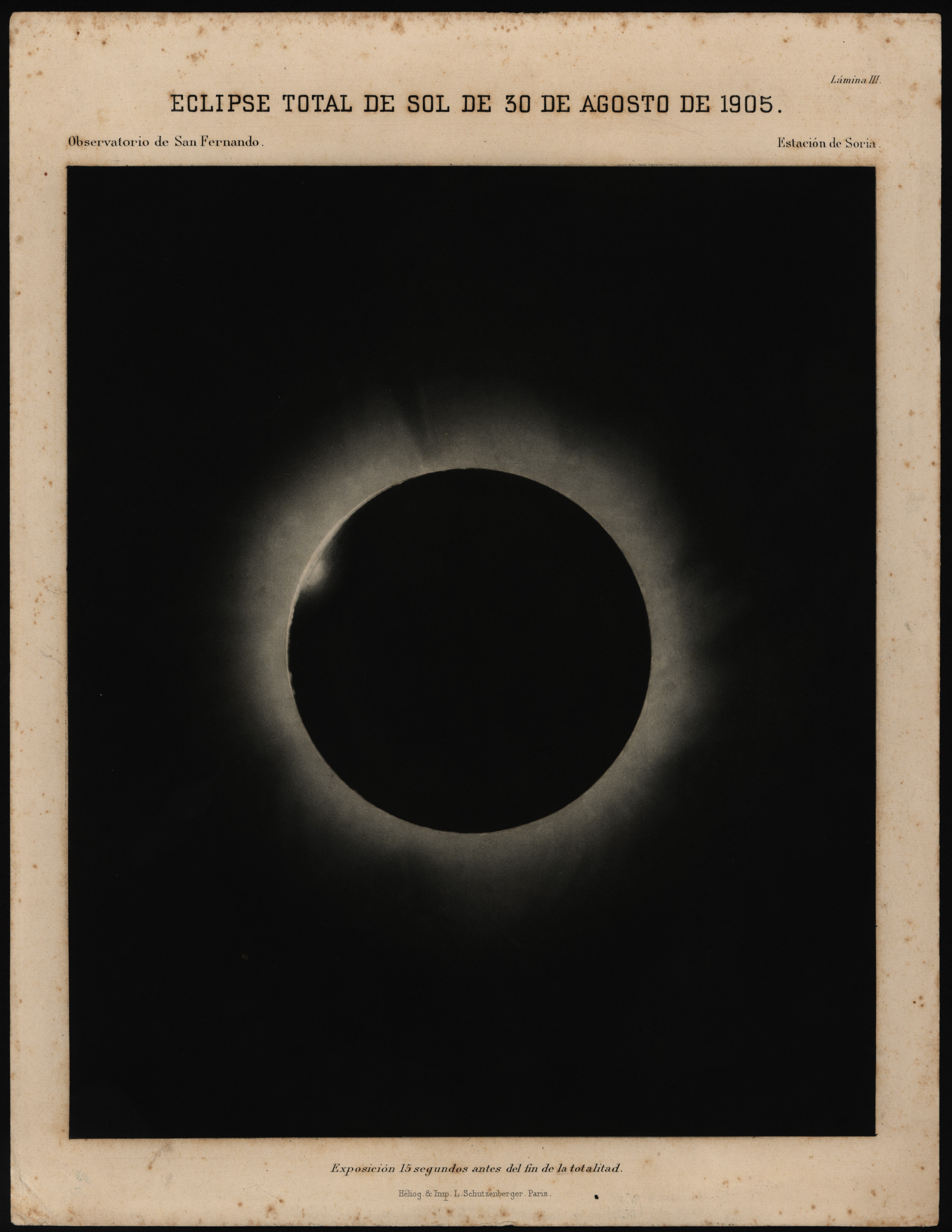
The eclipse of August 30, 1905, also generated enormous interest among the national and international scientific community. Various Spanish institutions were stationed in different locations throughout the provinces of Burgos, Guadalajara, La Rioja, and Soria. International teams, hailing from France, the United Kingdom, Italy, Switzerland, Portugal, the Netherlands, Russia, Hungary, Mexico, and the United States, were stationed throughout the entire path of totality. All of them undertook different tasks to advance our understanding of solar physics, as well as to investigate the possibility that there might be an undiscovered planet near the Sun.
But aside from this undeniable scientific interest, and just as happens today, a fierce competition broke out among numerous towns to be named the best place to view the eclipse. Burgos emerged victorious in this race, in part because it managed to persuade King Alfonso XIII himself, along with the royal family, to travel to the city to enjoy the spectacle.
His presence drew a large number of prominent figures from all walks of life, as well as a large crowd that had traveled to the event, further enticed by a program of festivities marking the eclipse that even included bullfights featuring some of the finest matadors of the time. The extensive coverage in the newspapers in the preceding months, coupled with a greater general understanding of what was to come, had created a genuine sense of anticipation, which led the pioneering local authorities to seize the great opportunity that presented itself to promote tourism. The government issued instructions to welcome foreigners with courtesy and respect, and the Army dispatched multilingual soldiers to assist the scientific teams in their work.
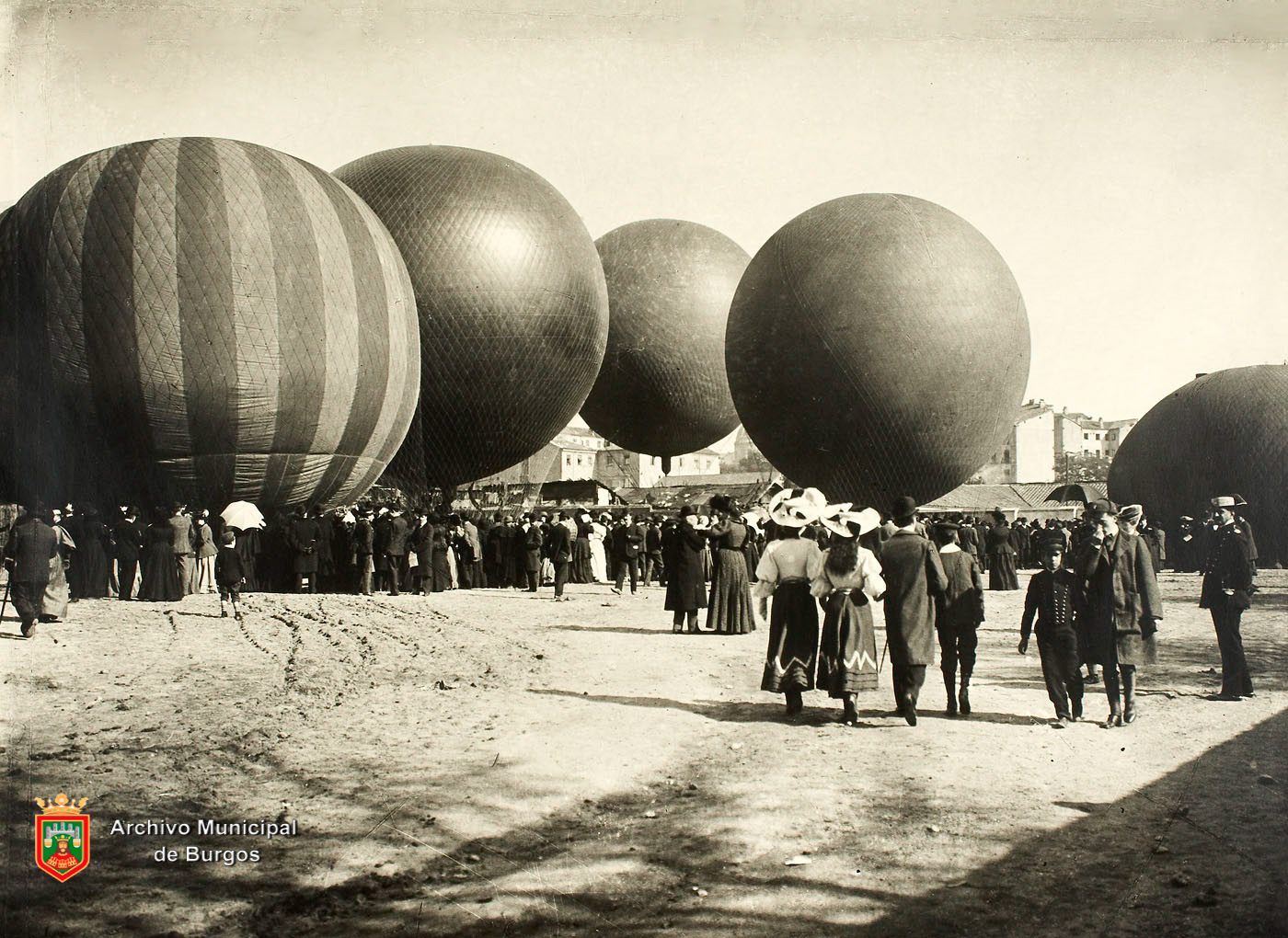
Those were also years when technological advances captured the public’s admiration and interest. And among them, few were more appealing than those related to the nascent conquest of the skies, which in 1905 still found its greatest expression in hot-air balloons, since airplanes were still in their infancy. That is why the Guadalajara Aerostation Park chartered the balloons Jupiter (carrying the great international aeronaut Berson), Uranus (piloted by Kindelán), and Mars, which carried on board the Spanish aeronaut Jesús Fernández Duro and the man who would become a great pioneer of Spanish aeronautics and astronautics, Emilio Herrera Linares.
The latter sketched the breathtaking sight of the eclipse as seen from above. He also left a beautiful account of how darkness spread beneath his feet, while the Sun cast reflections off the clouds below them that threatened to obscure the view of the eclipse from the ground, but which eventually receded. And above all, the first description of the reflections that the Sun’s reappearance cast in the upper layers of the atmosphere.
2026: Science and Entertainment
These two eclipses, as we have said, reflect the two sides that, even today, a total solar eclipse evokes. And on August 12, in Palencia, the Canary Islands Institute of Astrophysics will participate in this astronomical celebration, which will also bring together leading national and international solar physicists as part of the NATE Project. And that fascination, and that anticipation, will not be so different from what those who came before us experienced, nor from what those who continue to contemplate the magic of the sky after us will experience.