Subvenciones relacionadas:
General
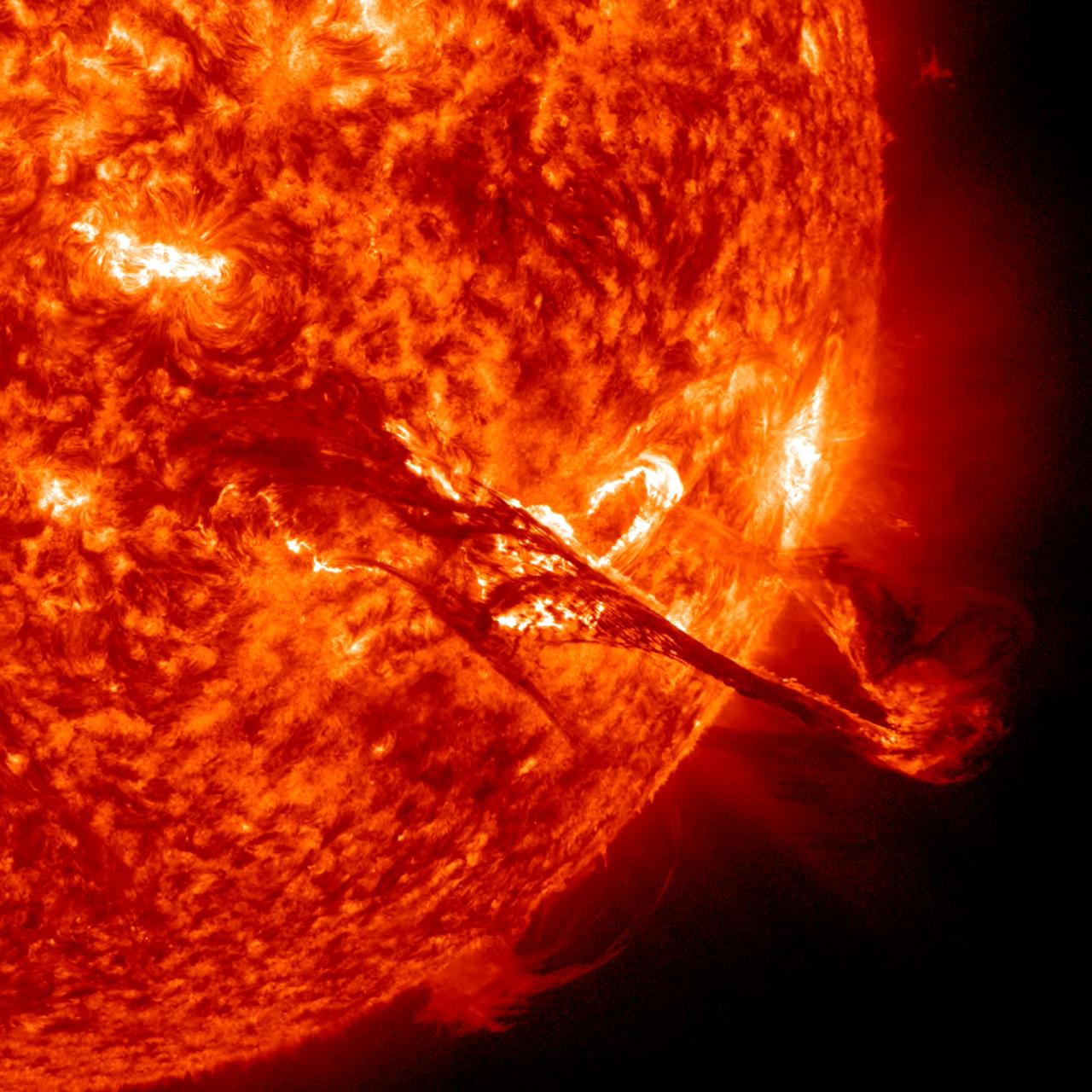
Los campos magnéticos son uno de los ingredientes fundamentales en la formación de estrellas y su evolución. En el nacimiento de una estrella, los campos magnéticos llegan a frenar su rotación durante el colapso de la nube molecular, y en el fin de la vida de una estrella, el magnetismo puede ser clave en la forma en la que se pierden las capas externas de forma dramática. En la vida adulta, el magnetismo da lugar a la actividad de las estrellas. Nuestro Sol tiene campos magnéticos que dan lugar a una actividad tan espectacular que es capaz de tener un impacto en la Tierra. Pero en otras estrellas, la actividad magnética es, en algunos casos, órdenes de magnitud más intensa que la solar, influenciando drásticamente el transporte de especies químicas y de momento angular, así como afectando posibles sistemas planetarios alrededor de éstas.
La finalidad de este Proyecto es estudiar diversas manifestaciones del campo magnético que se pueden observar en la atmosfera solar y en otras estrellas. Estas incluyen estructuras tan diversas como las manchas solares, los campos débiles presentes en el sol en calma o estructuras cromosféricas y coronales como los filamentos y las protuberancias. Así, se han ido abordando gradualmente los siguientes temas de investigación:
Magnetismo solar
- Estructura y evolución del campo magnético en manchas solares.
- Estructura y evolución del campo magnético en el Sol en calma.
- Estructura y evolución del campo magnético en la cromosfera y en estructuras cromosféricas (protuberancias, espículas,...)
- Estructura y evolución del campo magnético en bucles coronales.
- Estructura y evolución del campo magnético global del Sol. Estudios del ciclo de actividad magnética.
- Estudio empírico de la propagación de ondas magnetohidrodinámicas en el seno de estructuras magnéticas.
- Estudio empírico de mecanismos relacionados con el calentamiento de las capas externas del Sol.
- Estudio empírico de la influencia de la ionización parcial en la dinámica de la atmósfera solar.
Magnetismo estelar
- Desarrollo de métodos numéricos para el diagnóstico del campo magnético estelar, tanto en la superficie como en la cromosfera.
- Estudio del magnetismo en protuberancias estelares.
- Impacto del campo magnético en las últimas fases de la evolución estelar.
Instrumentación astronómica
- Desarrollo de instrumentación de vanguardia para observaciones espectropolarimétricas, como el instrumento GRIS.
- Participación en el proyecto del Telescopio Solar Europeo mediante el desarrollo de instrumentación de vanguardia, como el instrumento EMBER.
Miembros
Resultados
- Se ha desarrollado torchmfbd, un nuevo software de código abierto diseñado para la restauración de imágenes astronómicas solares basado en la librería PyTorch. Su objetivo principal es corregir las distorsiones causadas por la turbulencia atmosférica mediante técnicas avanzadas de deconvolución ciega multi-objeto y multi-fotograma. Gracias a la aceleración por GPU, el código permite procesar grandes volúmenes de datos con una eficiencia significativamente mayor que los métodos tradicionales. Además de ser flexible y permitir la incorporación de nuevas técnicas de regularización, el sistema demuestra su eficacia logrando reconstrucciones de alta calidad que alcanzan el límite de difracción (Asensio Ramos et al., 2025).
- El objetivo del trabajo presentado por Khomenko et al. (2025) es entender los mecanismos de calentamiento de la cromosfera solar a través del uso de simulaciones magneto-hidrodinámicas 3D que consideran que el plasma solar contiene una fracción considerable de gas neutro. Además, dichas simulaciones tienen en cuenta el impacto o la carencia de la difusión ambipolar. Este estudio revela que cuando se incluye la difusión ambipolar en la simulación, la temperatura promedio es unos 600 K mayor que en el caso en el que no se considera la difusión ambipolar. Además, ese incremento de temperatura es mayor a medida que se aumenta la resolución espacial de la simulación.
- El grupo solar es el principal responsable del instrumento Gregor Infrared Spectrograph. Este instrumento comenzó a operar en el año 2012 en el telescopio Gregor, ubicado en el OT, y ha sido un recurso exitoso para la comunidad científica internacional. Debido a ese éxito y a la gran demanda de su uso, se iniciaron una serie de mejoras en los últimos años para dotarlo de mayores capacidades científicas, principalmente la opción de ofrecer la observación de múltiples regiones espectrales de manera simultánea mediante la instalación de brazos ópticos adicionales y la opción de elegir diferentes unidades campo integral. Después de varios años de desarrollo, en abril de 2024, el instrumento inició la fase de comisionado de estas mejoras, lo que ha resultado en un éxito rotundo, tanto por la alta demanda por parte de los usuarios como por la calidad de los datos obtenidos durante las campañas de observación. En el año 2025 el instrumento integró la primera unidad de campo integral (habrá dos adicionales en el futuro) con la opción de observar múltiples regiones espectrales simultáneamente, ofreciendo unpotencial científico que no existe en ningún telescopio en el mundo. Los resultados de esta última actualización se presentarán en el SPIE 2026 que se celebrará en Dinamarca. Además, también se publicó el primer trabajo usando los datos de primera luz de 2024, Quintero Noda et al. (2025), en el que se estudiaban las propiedades del campo magnético en una mancha solar.