IACTEC hosted a two-day meeting on 10 and 12 November for staff who have recently joined EST, with sessions covering the project’s scientific objectives, its European context and its main engineering challenges
The European Solar Telescope (EST) held a welcome meeting for new staff on 10 and 12 November at the IACTEC facilities in Tenerife. The event provided an overview of the project’s scientific and technological objectives and helped new colleagues find their place within its teams.
Building a research infrastructure such as EST requires specialists from many disciplines to work together. The meeting gave participants an opportunity to understand how the different areas of the project fit together, share knowledge and strengthen collaboration.
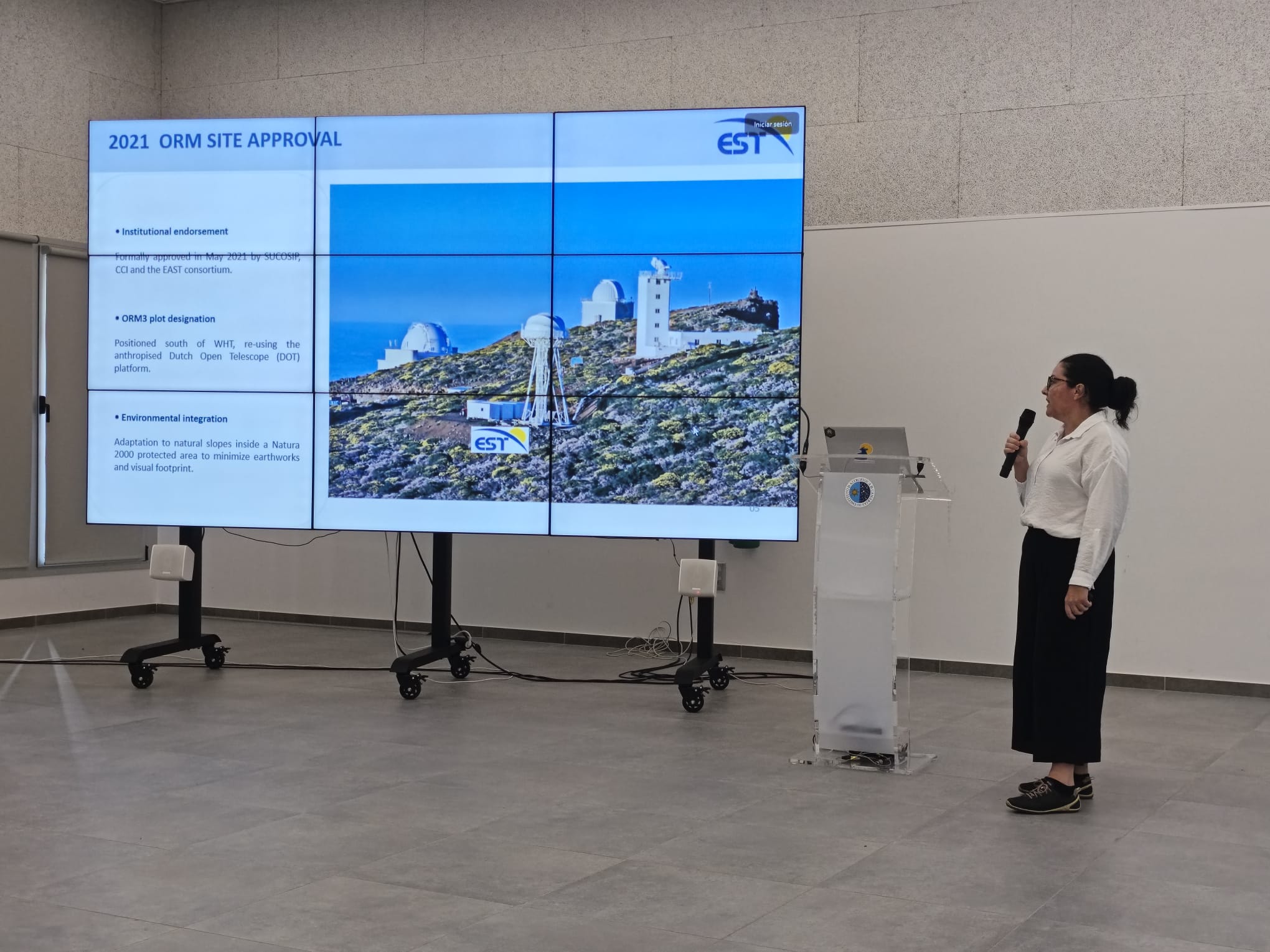
The programme opened on Tuesday 10 November with a welcome from Manuel Collados, EST Principal Investigator at the Instituto de Astrofísica de Canarias (IAC). Héctor Socas, Director of the European Solar Telescope Canarian Foundation, then presented an overview of EST and its scientific objectives, while Alejandra Martín, the Foundation’s Administrator, discussed its strategic importance for Europe. Miguel Núñez, EST Technical Director, outlined the telescope’s engineering objectives.
The first day continued with sessions on systems engineering, led by Ángel Mato, EST Systems Engineer; optics, with Álvaro Pérez, Head of Optical Engineering; and single-conjugate adaptive optics and active optics, with Esther Soria, Optical Engineer. These talks introduced participants to some of the systems needed for high-precision solar observations.
A shared understanding of the project
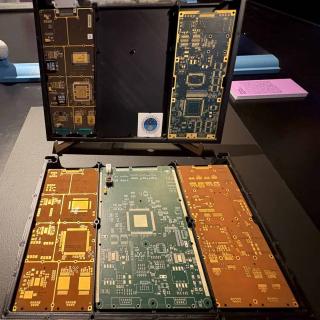
The second day, Thursday 12 November, began with a presentation by Luzma Montoya on EST’s multi-conjugate adaptive optics. The programme also covered outreach, with Nira Llarena; mechanics, with Juan Cózar; control systems, with Fernando Merlos; and buildings and civil works, with Yanira Carballo. Silvia Regalado presented the EMBER.
The tour of these areas enabled participants to contextualise each team’s work within the wider telescope project and to understand how scientific requirements link up with the technological solutions and the infrastructure needed for its operation.
As well as facilitating the integration of new staff, the sessions aimed to foster a shared understanding of EST and encourage exchange between its scientific, technical and public outreach departments. Through this initiative, the project strengthened team coordination in preparation for the next phases of development of the future European solar telescope.