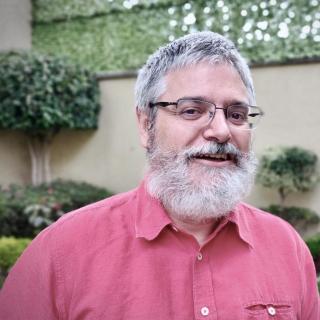
The international consortium Sloan Digital Sky Survey-V (SDSS-V) has appointed Dr Sebastián Francisco Sánchez, researcher at the Institute of Astronomy of the National Autonomous University of Mexico and senior scientist on leave from the Instituto de Astrofísica de Canarias (IAC), as director of the Local Volume Mapper (LVM) project, one of the three surveys that make up the SDSS-V. This appointment recognises Dr Sánchez's academic excellence and consolidates the collaboration with the IAC, with which the researcher has maintained a close scientific relationship for many years. Dr Sánchez
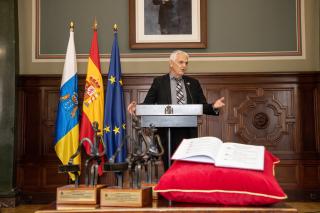
El Instituto de Astrofísica de Canarias (IAC) ha sido distinguido por la Delegación del Gobierno en Canarias con uno de los reconocimientos entregados durante el acto de conmemoración del 47 aniversario de la Constitución española de 1978, celebrado este 6 de diciembre y presidido por el delegado del Gobierno en Canarias, Anselmo Pestana. La Delegación del Gobierno ha reconocido la labor del IAC, que celebra su 40 aniversario, en virtud del artículo 44.2 de la Constitución Española, por su fundamental contribución a la promoción de la ciencia y la investigación científica y técnica en
The Instituto de Astrofísica de Canarias (IAC) has opened the application period for the XXXVI Canary Islands Winter School of Astrophysics , which will be held from 17 to 22 November 2025. This edition is carried out in the framework of the CELESTE (Centre for Optical and Space Technologies of the IAC) programme funded by the European Union and will focus on key optical technologies for astronomy, a field that is driving 21st century discoveries about the universe. Applications will be accepted until Friday, 13 June. The IAC’s Winter School is renowned for its educational approach and