Chemical Abundances in Stars

Start year
2010
Organizational Unit
    General
    Description

    Stellar spectroscopy allows us to determine the properties and chemical compositions of stars. From this information for stars of different ages in the Milky Way, it is possible to reconstruct the chemical evolution of the Galaxy, as well as the origin of the elements heavier than boron, created mainly in stellar interiors. It is also possible to study stellar formation, and the formation of the Galaxy, from the signature of the Galactic potential on the stellar orbits, and the distributions of mass, ages, and the abundance of heavy elements.

    Obtaining high-resolution spectra, as necessary for studies of chemical compositions, requires advanced and efficient instrumentation. This is particularly true for research that calls for large stellar samples, which demands the observation of hundreds or thousands of sources simultaneously. Efficiency requires that the data processing and analysis are performed in an automated way.

    The interpretation of spectra is based on physical models of the atmospheres of the stars, from where the light that we observe escapes the stars. The main ingredients for building such models are the fluid dynamics, and the properties of the atoms, ions, and molecules, especially regarding their interactions with the radiation coming from the stellar interior.

    Once we have a plausible model, it is possible to compute in detail how the radiation propagates through the stellar atmosphere, and the emergent spectrum, which can then be iteratively compared with the observations to refine the model.

    This project covers three different research fronts:

    - Improving model atmospheres and simulations of stellar spectra.

    - Developing tools for acquisition, reduction, and analysis of spectroscopic observations, in particular for the determination of chemical abundances in stars.

    - Designing, preparing, and executing spectroscopic studies of stars aimed at understanding a) the most relevant aspects of the physics of stellar atmospheres, b) the formation and evolution of stars, c) the origin of the chemical elements, and d) the formation, structure, and evolution of the Milky Way galaxy.

    Principal investigator
    Collaborators
    Dr.
    I. Hubeny
    Dr.
    B. Castanheira
    Dr.
    M. Kilic
    Dr.
    S. Majewski
    Dr.
    H.G. Ludwig
    Dr.
    M. Cropper
    Dr.
    M. P. Ruffoni
    Dr.
    J. C. Pickering
    Dr.
    K. Cunha
    Dr.
    Andrew Cooper
    Dr.
    Boris Gaensicke
    1. Complete the installation and commissioning of HORuS on GTC
    2. Discover two new stars with more than 100,000 times less iron than the Sun
    3. Complete the classification of all the APOGEE spectra with K-means
    4. Publish a complete collection of model stellar spectra for stars O to M
    5. Identify the signature of chemical diffusion in the atmospheres of the stars in the cluster M67

    Related publications

    The Gaia ultracool dwarf sample-IV. GTC/OSIRIS optical spectra of Gaia late-M and L dwarfs 2024MNRAS.534..695C
    The Pristine Inner Galaxy Survey (PIGS): IX. The largest detailed chemical analysis of very metal-poor stars in the Sagittarius dwarf galaxy 2024A&A...689A.201S
    Isotopic abundance of carbon in the DLA towards QSO B1331+170 2024MNRAS.534...12M
    ESPRESSO reveals blueshifted neutral iron emission lines on the dayside of WASP-76 b 2024A&A...689A...8C
    Three super-Earths and a possible water world from TESS and ESPRESSO 2024A&A...688A.216H
    The updated BOSZ synthetic stellar spectral library 2024A&A...688A.197M
    Magnetic Fields in M-dwarf Members of the Pleiades Open Cluster Using APOGEE Spectra 2024ApJ...971..112W
    DESI Early Data Release Milky Way Survey value-added catalogue 2024MNRAS.533.1012K
    Discovery of an Extremely r-process-enhanced Thin-disk Star with [Eu/H] = +0.78 2024ApJ...970L..30X
    Single-epoch and Differential Astrometric Microlensing of Quasars 2024ApJ...970...11F
    The Early Data Release of the Dark Energy Spectroscopic Instrument 2024AJ....168...58D
    AuriDESI: mock catalogues for the DESI Milky Way Survey 2024MNRAS.531.4108K
    On the Pair-instability Supernova Origin of J1010+2358 2024ApJ...968L..23S
    The enigma of Gaia18cjb: A possible rare hybrid of FUor and EXor properties 2024A&A...686A.160F
    The Gaia-ESO Survey: The DR5 analysis of the medium-resolution GIRAFFE and high-resolution UVES spectra of FGK-type stars 2024A&A...684A.148W
    TESS and ESPRESSO discover a super-Earth and a mini-Neptune orbiting the K-dwarf TOI-238* 2024A&A...685A..56S
    The Pristine Inner Galaxy Survey - VIII. Characterizing the orbital properties of the ancient, very metal-poor inner Milky Way 2024MNRAS.530.3391A
    The wide-field, multiplexed, spectroscopic facility WEAVE: Survey design, overview, and simulated implementation 2024MNRAS.530.2688J
    The discovery space of ELT-ANDES. Stars and stellar populations 2024ExA....57...17R
    The compact multi-planet system GJ 9827 revisited with ESPRESSO★ 2024A&A...684A..22P
    A Perspective on the Milky Way Bulge Bar as Seen from the Neutron-capture Elements Cerium and Neodymium with APOGEE 2024ApJ...965..119S
    Validation of the Scientific Program for the Dark Energy Spectroscopic Instrument 2024AJ....167...62D
    Cosmology and fundamental physics with the ELT-ANDES spectrograph 2024ExA....57....5M
    Fundamental physics with ESPRESSO: a new determination of the D/H ratio towards PKS1937-101 2024MNRAS.529..839G
    The Shapes of Stellar Spectra 2023Atoms..11...61A
    Probing the small-scale structure of the intergalactic medium with ESPRESSO: spectroscopy of the lensed QSO UM673 2024MNRAS.528.6845C
    Constraining stellar and orbital co-evolution through ensemble seismology of solar-like oscillators in binary systems. A census of oscillating red giants and dwarf stars in Gaia DR3 binaries 2024A&A...682A...7B
    The APOGEE value-added catalogue of Galactic globular cluster stars 2024MNRAS.528.1393S
    When the horseshoe fits: Characterizing 2023 FY<SUB>3</SUB> with the 10.4 m Gran Telescopio Canarias and the Two-meter Twin Telescope 2024A&A...681A...4D
    Survey Operations for the Dark Energy Spectroscopic Instrument 2023AJ....166..259S
    The <SUP>12</SUP>C/<SUP>13</SUP>C isotopic ratio at the dawn of chemical evolution 2023A&A...679A..72M
    Optical and Infrared Counterparts of the X-Ray Sources Detected in the Chandra Cygnus OB2 Legacy Survey 2023ApJS..269....9G
    The Pristine survey - XXII. A serendipitous discovery of an extremely Li-rich very metal-poor giant and a new method of <SUP>6</SUP>Li/<SUP>7</SUP>Li isotope measurement 2023MNRAS.526.5976S
    GTC Follow-up Observations of Very Metal-poor Star Candidates from DESI 2023ApJ...957...76A
    A Tale of Two Disks: Mapping the Milky Way with the Final Data Release of APOGEE 2023ApJ...954..124I
    The Gaia-ESO Survey: Homogenisation of stellar parameters and elemental abundances 2023A&A...676A.129H
    Decoding the compositions of four bright r-process-enhanced stars 2023MNRAS.524.5607S
    iNNterpol: High-precision interpolation of stellar atmospheres with a deep neural network using a 1D convolutional auto encoder for feature extraction 2023A&A...675A.191W
    Opacity for realistic 3D MHD simulations of cool stellar atmospheres 2023A&A...675A.160P
    Stellar Characterization and Radius Inflation of Hyades M-dwarf Stars from the APOGEE Survey 2023ApJ...951...90W
    Related projects
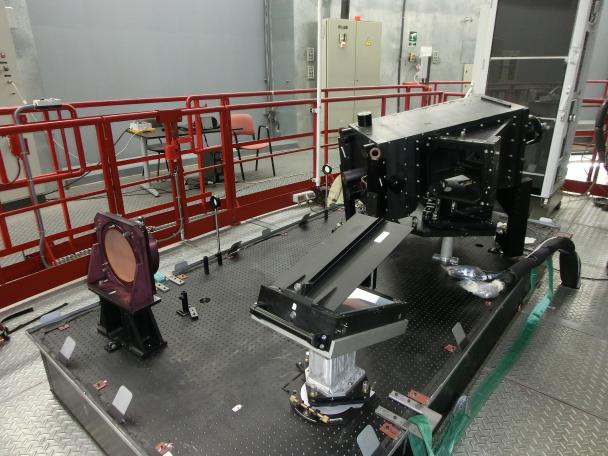
    Optical bench
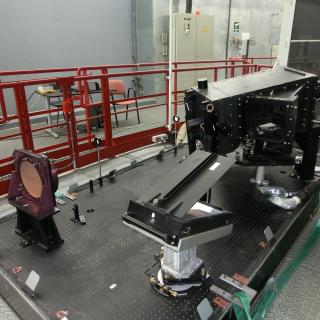
    HORuS - High Optical Resolution Spectrograph
    High-resolution spectrograph for the 10-m Gran Telescopio Canarias (GTC) based on components from UES, a spectrograph which was in use at the 4.2-m William Herschel Telescope (WHT) between 1992 and 2001.
    Carlos
    Allende Prieto
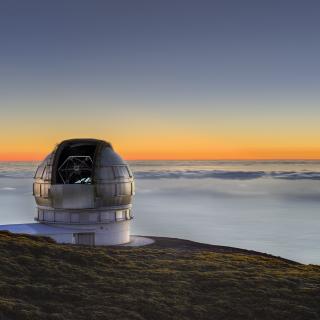
    Gran Telescopio Canarias (GTC)
    SEVERO OCHOA 2016 - 2019
    The IAC is an internationalized Spanish research centre aiming to achieve major advances in the understanding of the laws that govern the origin and evolution of the various forms of matter/energy in the Universe. Outstanding results are expected in key areas of research such as Solar physics, Sun-Earth connections, Exoplanetary systems, Solar
    Rafael
    Rebolo López