Helio and Astero-Seismology and Exoplanets Search

    General
    Description

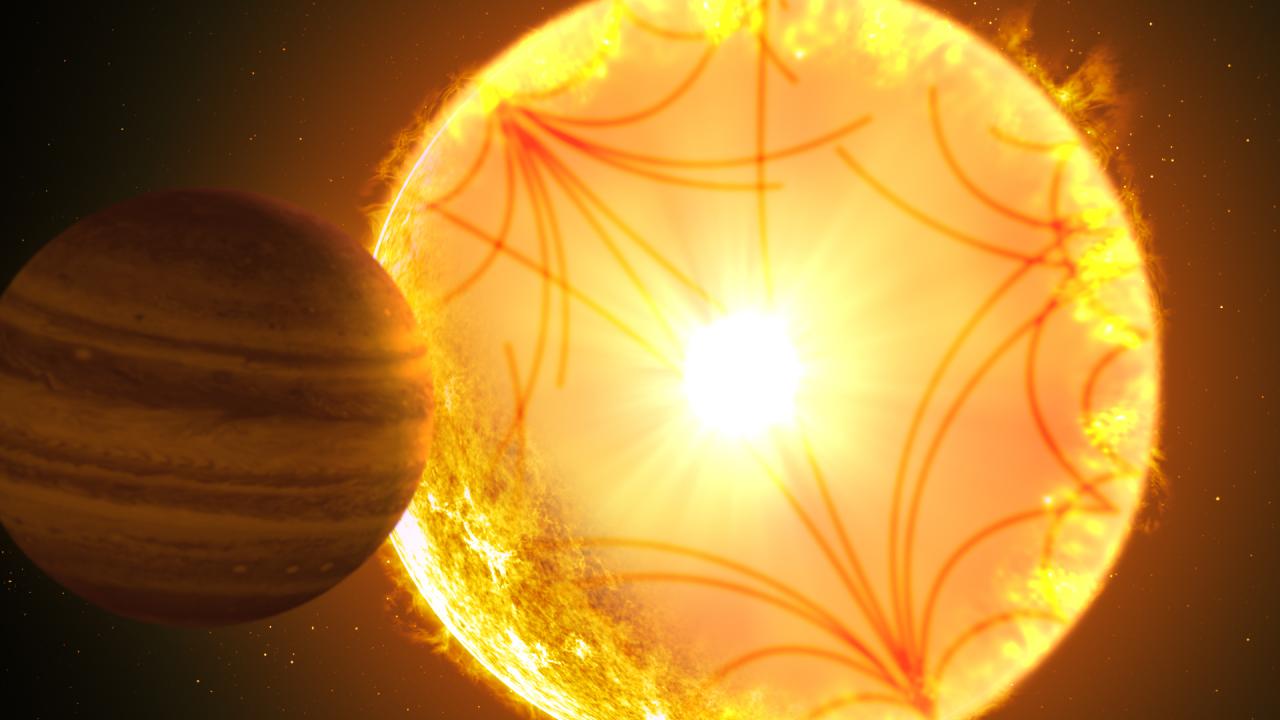
    The principal objectives of this project are: 1) to study the structure and dynamics of the solar interior, 2) to extend this study to other stars (either single or in binary systems), 3) to search for extrasolar planets using photometric methods (primarily by transits of their host stars) and their characterization with complementary radial velocity information.

    To reach our first objective, we use Helioseismology (analysis of the solar oscillation eigenmodes), a technique that enables us to infer the Sun's internal structure and dynamics with high accuracy. This project covers the various aspects necessary to attain the aforementioned objectives: instrumental and observational (with the international networks BiSON and GONG operating at the ”SolarLab” at Observatorio del Teide), reduction, analysis, and interpretation of data (in particular, the GOLF and VIRGO instruments aboard   ESA/SoHO satellite). Finally, theoretical developments in inversion techniques are carried out.

    Furthermore, Asteroseismology applies similar techniques to other oscillating stars to infer their evolutionary state as well as their internal structure and dynamics. Thanks to the high-quality photometric data collected by the CoRoT, Kepler, and TESS space missions, it is possible to extract global seismic parameters for hundreds of thousands of solar-like stars, from the main sequence through the red-giant phase. Stellar evolution models are used to find the model that best fits the observables (spectroscopic and individual mode frequencies), providing precise mass, radius, and age for the star. Binary stars provide additional strong constraints on these models and therefore allow testing the intricacies of internal stellar physics.

    Precise exoplanet characterization is critically dependent on an accurate knowledge of the host star. In particular, a reliable determination of the stellar age is required to constrain the age and evolutionary state of the planetary system, and to place robust limits on long-term habitability. At the interface between asteroseismology and exoplanet science, detailed seismic modeling of host stars is used to refine the ages of planetary systems. Strong involvement is ensured in the preparation of the ESA PLATO mission (launch expected at the end of 2026), including light-curve calibration, contributions to the science calibration and validation input catalog (scvPIC), proposals for complementary science, and ground-based follow-up observations.

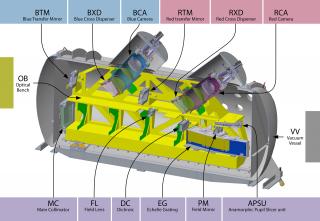
    For this project, ground-based observations with the observational facilities available to IAC researchers, in particular at OCAN (Observatorios de Canarias), are key. In particular, ongoing observations with the ground-based, high-precision spectrographs on the SONG (Stellar Observations Network Group) and the Las Cumbres Observatory Network (LCO) are being conducted to improve the spectroscopic and seismic characterization of oscillating stars and to identify binary systems.

    Principal investigator

    Milestones

    1. Beck et al. (2024, A&A, 682, A7) increased the number of known solar-like oscillators in binary systems by about an order of magnitude. Such large sample allowed us to study the effects co-evolution of stellar evolution on the evolution of the binary orbits. Featured as "ESA Gaia image of the Week".
    2. Following the participation to the roadmaps in astrophysics for the ESA’s Human and Robotic Exploration Directorate in 2021, a paper in npj Microgravity was published where the key quetions in stellar physics were exposed along with proposed experiments for the future as part of that program (Mathur & Santos 2024).
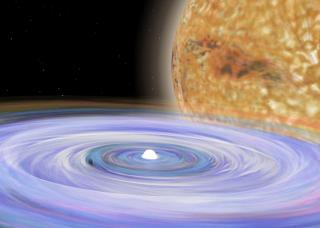
    3. Merc et al. (2024, A&A, 683, A84) presented the first analysis of accretion-induced flickering variability in symbiotic binary stars from TESS lightcurves. This study significantly enlarged the known sample with such variability. This suggests that accretion disks are common in symbiotic stars.
    4. Solar magnetic activity in cycles 23&24 were analyzed by tracking GOLF low-degree p-mode frequency shifts across 3 bands, probing depths of 74–1575 km. Results suggest magnetic variations mainly occur near the surface. In cycle 24, shifts appeared earlier at high latitudes and coincided with surface activity near the equator, with stronger shifts at shallower depths.

    Related publications

    Presentation of the reduction pipeline of the SONG échelle spectrograph 2012AN....333.1107T
    Study of HD 169392A observed by CoRoT and HARPS 2013A&A...549A..12M
    Characterizing Two Solar-type Kepler Subgiants with Asteroseismology: KIC 10920273 and KIC 11395018 2013ApJ...763...49D
    From CoRoT 102899501 to the Sun. A time evolution model of chromospheric activity on the main sequence 2012A&A...548A..15G
    Pulsational amplitude growth of the star KIC 3429637 (HD 178875) in the context of Am and ρ Pup stars 2012MNRAS.427.1418M
    Misleading variations in estimated rotational frequency splittings of solar p modes: consequences for helioseismology and asteroseismology 2012MNRAS.422.3564B
    Intermediate Resolution Near-infrared Spectroscopy of 36 Late M Dwarfs 2012AJ....144...99D
    Fundamental Properties of Stars Using Asteroseismology from Kepler and CoRoT and Interferometry from the CHARA Array 2012ApJ...760...32H
    Multisite spectroscopic seismic study of the β Cep star V2052 Ophiuchi: inhibition of mixing by its magnetic field 2012MNRAS.427..483B
    Variations of the solar granulation motions with height using the GOLF/SoHO experiment 2008A&A...490.1143L
    Reliability of P mode event classification using contemporaneous BiSON and GOLF observations 2008JPhCS.118a2088S
    Misaligned spin-orbit in the XO-3 planetary system? 2008A&A...488..763H
    Helioseismology program for the PICARD satellite 2008AN....329..508C
    T-Lyr1-17236: A Long-Period Low-Mass Eclipsing Binary 2008ApJ...687.1253D
    Measurement of Low Signal-To-Noise Ratio Solar p-Modes in Spatially Resolved Helioseismic Data 2009ApJ...696..653S
    A Stellar Model-fitting Pipeline for Asteroseismic Data from the Kepler Mission 2009ApJ...699..373M
    A semi-automatic procedure for abundance determination of A- and F-type stars 2009MNRAS.396.1689H
    Turbulent eddy-time-correlation in the solar convective zone 2010A&A...522L...2B
    A Seismic Signature of a Second Dynamo? 2010ApJ...718L..19F
    Seismic signatures of stellar cores of solar-like pulsators: Dependence on mass and age 2010AN....331..940B
    Mode visibilities in radial velocity and photometric Sun-as-a-star helioseismic observations 2011A&A...528A..25S
    Search for radial velocity variations in eight M-dwarfs with NIRSPEC/Keck II 2012A&A...538A.141R
    The quest for the solar g modes 2010A&ARv..18..197A
    The quasi-biennial periodicity (QBP) in velocity and intensity helioseismic observations. The seismic QBP over solar cycle 23 2012A&A...539A.135S
    On the Solar Origin of the Signal at 220.7 μHz: A Possible Component of a g-Mode? 2009ApJS..184..288J
    Acoustic power absorption and enhancement generated by slow and fast MHD waves. Evidence of solar cycle velocity/intensity amplitude changes consistent with the mode conversion theory 2010A&A...516A..30S
    Doppler tomography of transiting exoplanets: a prograde, low-inclined orbit for the hot Jupiter CoRoT-11b 2012A&A...543L...5G
    Characterization of the HD 17156 planetary system 2009A&A...503..601B
    Absolute parameters of the Algol binary Z Vul 2009NewA...14..528L
    The impact of seismicity on high angular resolution astronomy: the case of El Teide Observatory, Canary Islands 2008SPIE.7012E.102E
    Unusual high-frequency oscillations in the Kepler δ Scuti star KIC 4840675 2012MNRAS.424.1187B
    The γ Doradus CoRoT target HD 49434. I. Results from the ground-based campaign 2008A&A...489.1213U
    The Kepler characterization of the variability among A- and F-type stars. I. General overview 2011A&A...534A.125U
    The excitation of solar-like oscillations in a δSct star by efficient envelope convection 2011Natur.477..570A
    Photometric multi-site campaign on massive B stars in the open cluster χ Persei (NGC 884) 2008JPhCS.118a2071S
    Looking for a Connection between the Am Phenomenon and Hybrid δ Sct -γ Dor Pulsation: Determination of the Fundamental Parameters and Abundances of HD 114839 and BD +18 4914 2011ApJ...743..153H
    Ground-based observations of the β Cephei CoRoT main target HD 180 642: abundance analysis and mode identification 2009A&A...506..269B
    Ground-based observations of the beta Cephei CoRoT main target HD 180642 2009CoAst.158..292B
    Ground-based observations of O and B stars 2009CoAst.158..156U
    Close-up of primary and secondary asteroseismic CoRoT targets and the ground-based follow-up observations 2008JPhCS.118a2077U
    Related projects
    Componentes del experimento PLATO
    PLATO (PLAnetary Transits and Oscillations of stars)
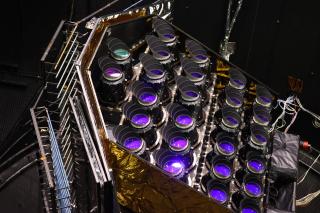
    PLAnetary Transits and Oscillations of stars (PLATO) is the third medium-class mission in ESA's Cosmic Vision programme. Its objective is to find and study a large number of extrasolar planetary systems, with emphasis on the properties of terrestrial planets in the habitable zone around solar-like stars
    Hans Jörg
    Deeg Deeg